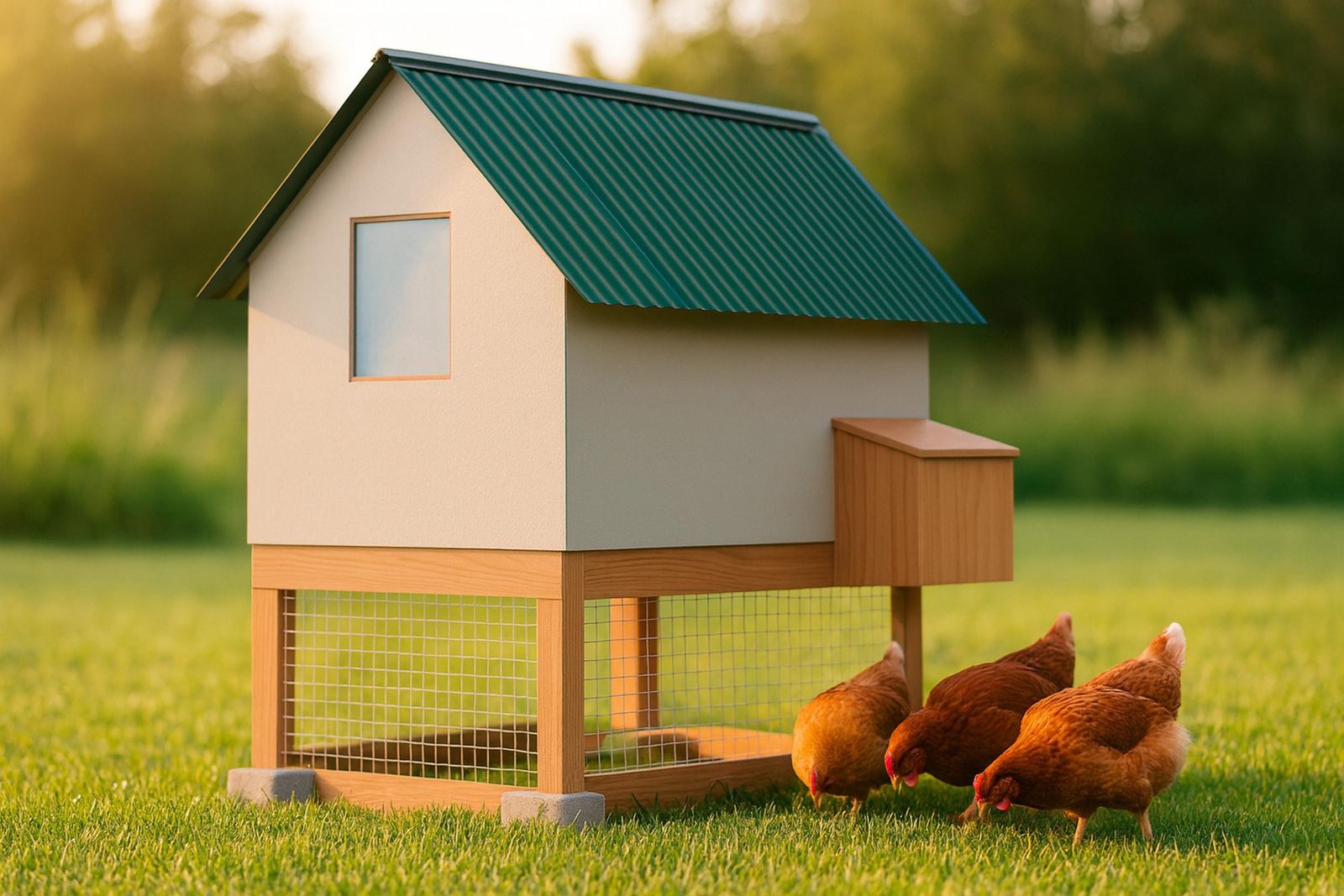
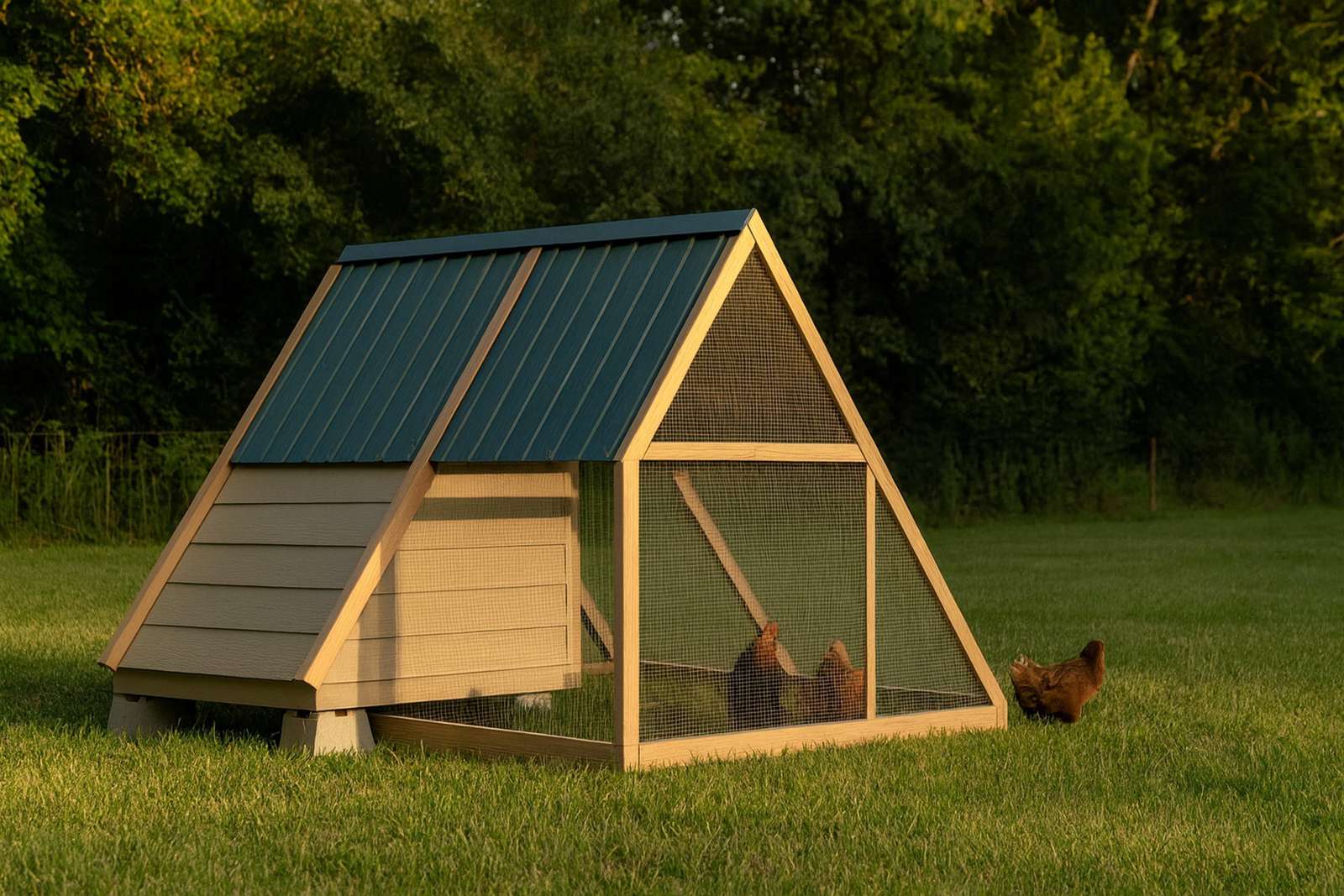
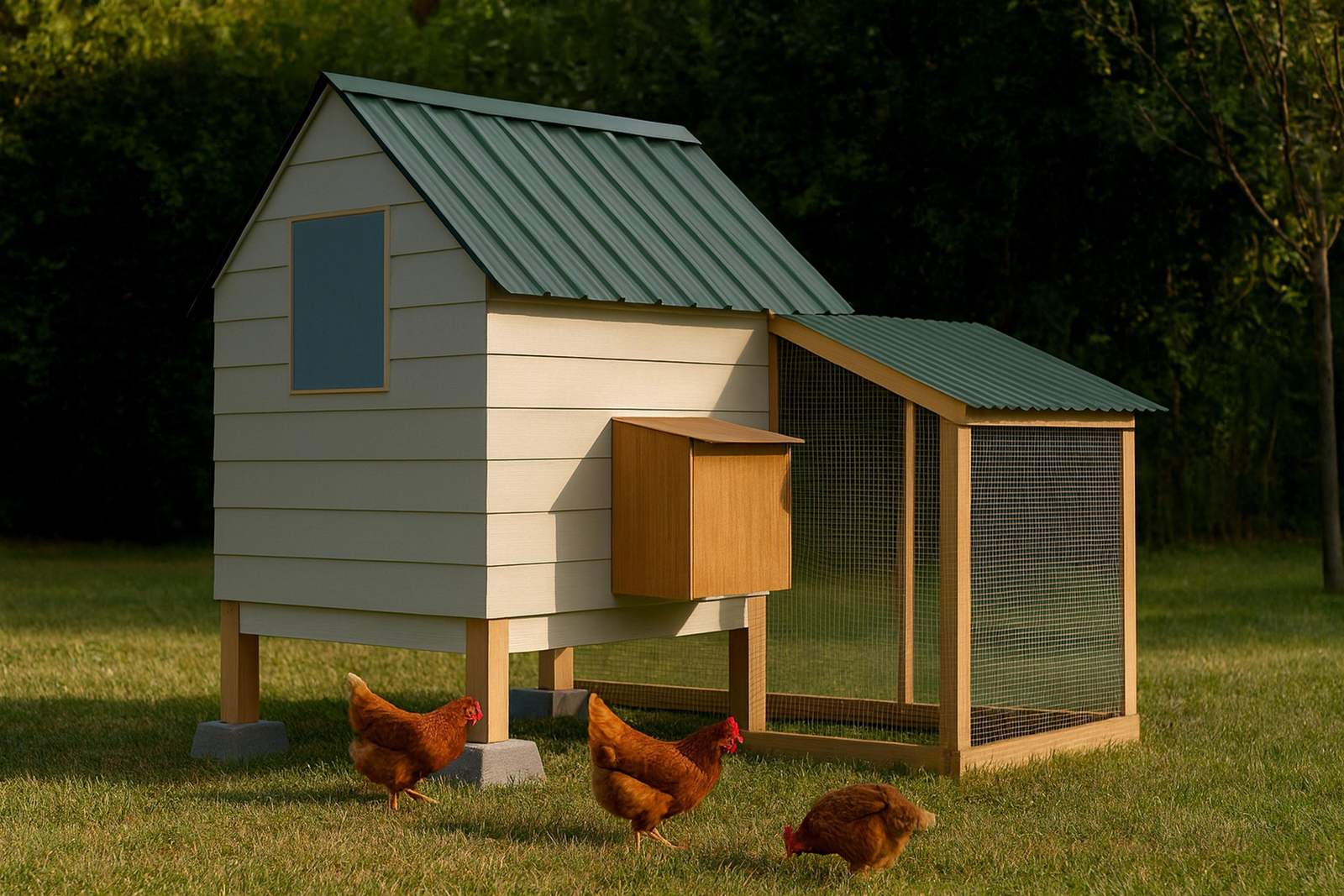
Two or three hens need 8 to 12 sq ft of coop floor and 20 to 30 sq ft of run, and our 4x4 starter coop (10 sq ft of floor, 16 sq ft run, rated 2-3) is the plan drawn for that flock. The 4x8 A-frame tractor carries the same 2 to 3 for a third of the money if you’ll move it. The 4x6 coop (16 sq ft, rated 3-4) is the one to build if three might become four. Don’t build for one hen; chickens are flock birds and a single hen is a miserable hen.
Three is the smallest flock most people start with. This page is the short list: four plans, the math, and which one to pick.
Four plans for the smallest flock
| Plan | Coop floor | Run | Rated | Coop per hen at 3 | Run per hen at 3 | Nests | Roost allowance | Materials | Build |
|---|---|---|---|---|---|---|---|---|---|
| 4x4 starter coop | 10 sq ft | 16 sq ft | 2-3 | 3.3 | 5.3 | 2 | 30 in | $1,650-$2,150 | 10-14 hrs |
| 4x8 A-frame tractor | 10 sq ft | 16 sq ft | 2-3 | 3.3 | 5.3 | 2 | 30 in | $675-$875 | 14-20 hrs |
| 4x6 chicken coop | 16 sq ft | 24 sq ft | 3-4 | 5.3 | 8.0 | 2 | 40 in | $1,900-$2,450 | 18-26 hrs |
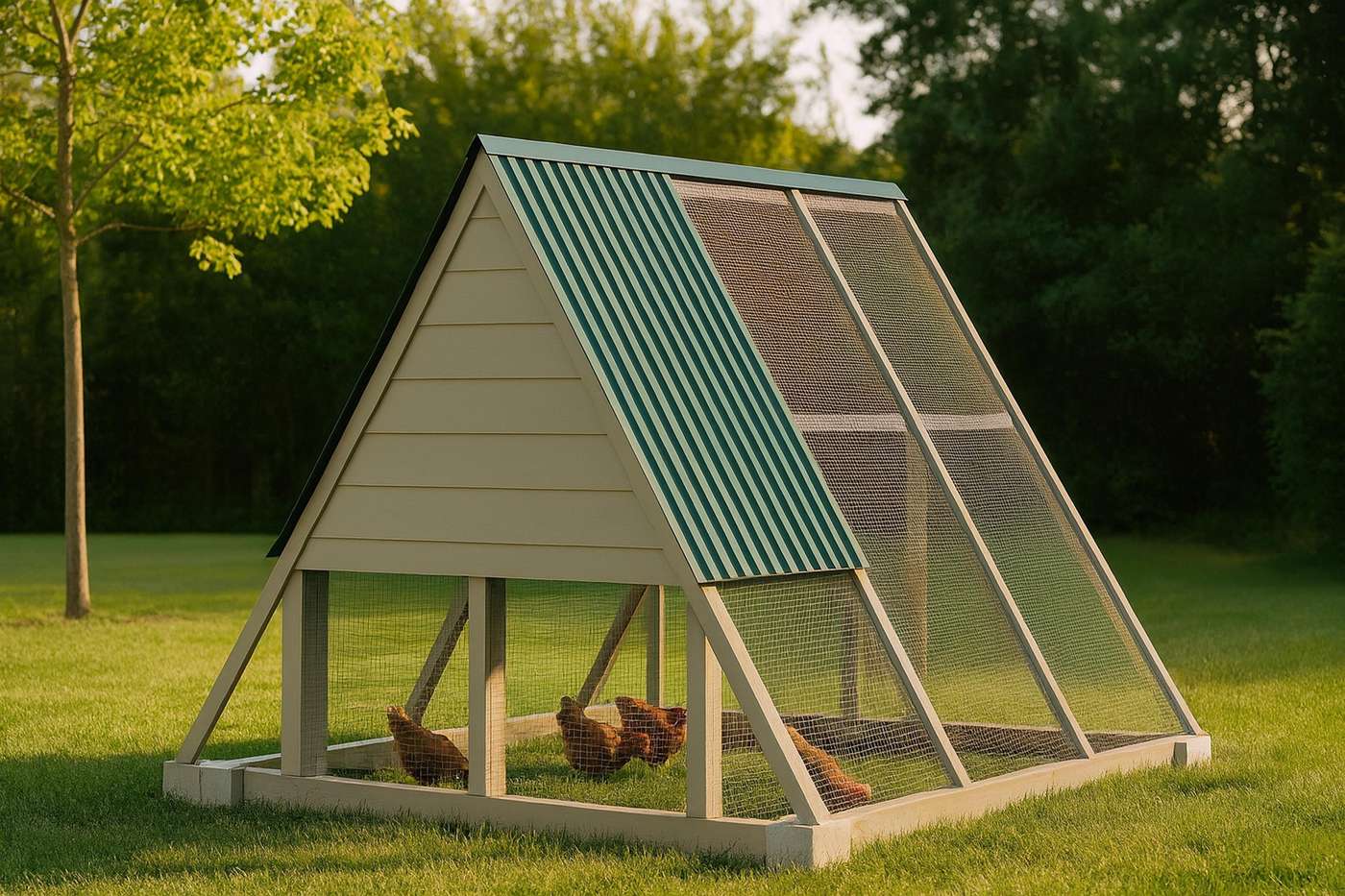
| 6x8 A-frame coop | 15 sq ft | 26 sq ft | 3-5 | 5.0 | 8.7 | 2 | 50 in | $975-$1,275 | 20-28 hrs |
Start with the honest line: at three hens the 4x4 and the 4x8 tractor are 3.3 sq ft of coop per bird, which clears Oregon State’s 3 sq ft floor and misses our own 4. Their 16 sq ft run is 5.3 a bird, a holding pen. Both are rated 2 to 3 for a reason, and at two hens the numbers are 5 and 8, which is comfortable. If the birds get out in the yard most days, three in a 4x4 is fine. If the run is their life, build the 4x6 or the 6x8 A-frame, both of which hit 8 sq ft of run per bird at three.
Roost for three hens is 24 to 30 inches at Virginia Tech’s 8 to 10 inches a bird. Our plans allow 10 per hen at the top of each rating (30 on the 4x4 and the tractor, 40 on the 4x6, 50 on the 6x8 A-frame), and the 4x4 and 4x6 cut lists build two 25-inch bars, 50 inches, so there’s spare. Two nest boxes is more than three hens need by Oregon State’s one-per-four rule, but one box is a bad idea; when it’s occupied the second hen lays on the floor.
The 4x4 starter
Ten square feet of floor on 18-inch legs, a 30 by 30 inch access door, one window, 1.5 sq ft of vent, and the whole thing with run is 4 by 8 feet, 32 sq ft on the ground. It goes together in one weekend and it’s rated Beginner for a reason: six posts on pier blocks, four 2x6 joists on a 42-inch span, a 24-inch rise, no rafter over 40 inches. It’s the plan we’d hand someone who’s never framed anything. The beginner plans guide walks the first-build process around this design.
The price surprises people. $1,650 to $2,150 for three hens’ worth of coop is $550 to $720 a bird, the worst per-hen number in our line, because hardware cloth, roofing, hinges and a latch cost the same whether the box is 4 feet or 8. Small coops are cheap to build and expensive per hen. That’s not a reason to skip it; it’s a reason to look at what’s in the bill before you compare it to a kit: quarter-inch 19-gauge hardware cloth on every opening (52 feet of it), a 12-inch buried apron, a 3/4-inch plywood floor, lap siding and metal roofing. Those are the lines a cheap kit skips.
The tractor, for a third of the money
The 4x8 A-frame tractor is the same 10 sq ft and 16 sq ft run in a triangle you drag to fresh grass. $675 to $875 because three things are missing on purpose: no foundation (no posts, piers or levelling), no siding past the coop skin at the closed end, and no floor under the run, because the grass is the floor. It’s the cheapest way to house three hens on this site. The condition is grass and a person who moves it every day or two; in a paved yard it’s a crowded triangle. The chicken tractor guide covers the routine.
Step up to the 4x6 if three might be four
The 4x6 costs $250 to $300 more than the 4x4, takes an extra weekend, and buys 6 more sq ft of floor, 8 more of run, 10 more inches of roost and a second window. At three hens it’s 5.3 sq ft a bird inside and 8 outside, which is the first plan on this page that meets both of our targets at three. Its rating runs to four, so the inevitable fourth hen fits. For most people with three hens and a normal yard, this is the right buy. The plans for 4 chickens page compares it to the 4x8s if four is likely.
Small lots and the neighbors
Every coop here is 48 sq ft or less on the ground with its run (the 4x4 and the tractor cover 32), under the 100 to 120 sq ft building-permit line most towns use and far under the 200 sq ft IRC R105.2 exempts. What bites at this size is the setback. Phoenix, for one, requires 80 feet from a neighbor’s dwelling or that neighbor’s written consent, and one rule like that can kill the spot you’d planned; the permit guide shows where to find yours. The small backyard coop guide covers placement, HOA rules and the quiet-breed question.