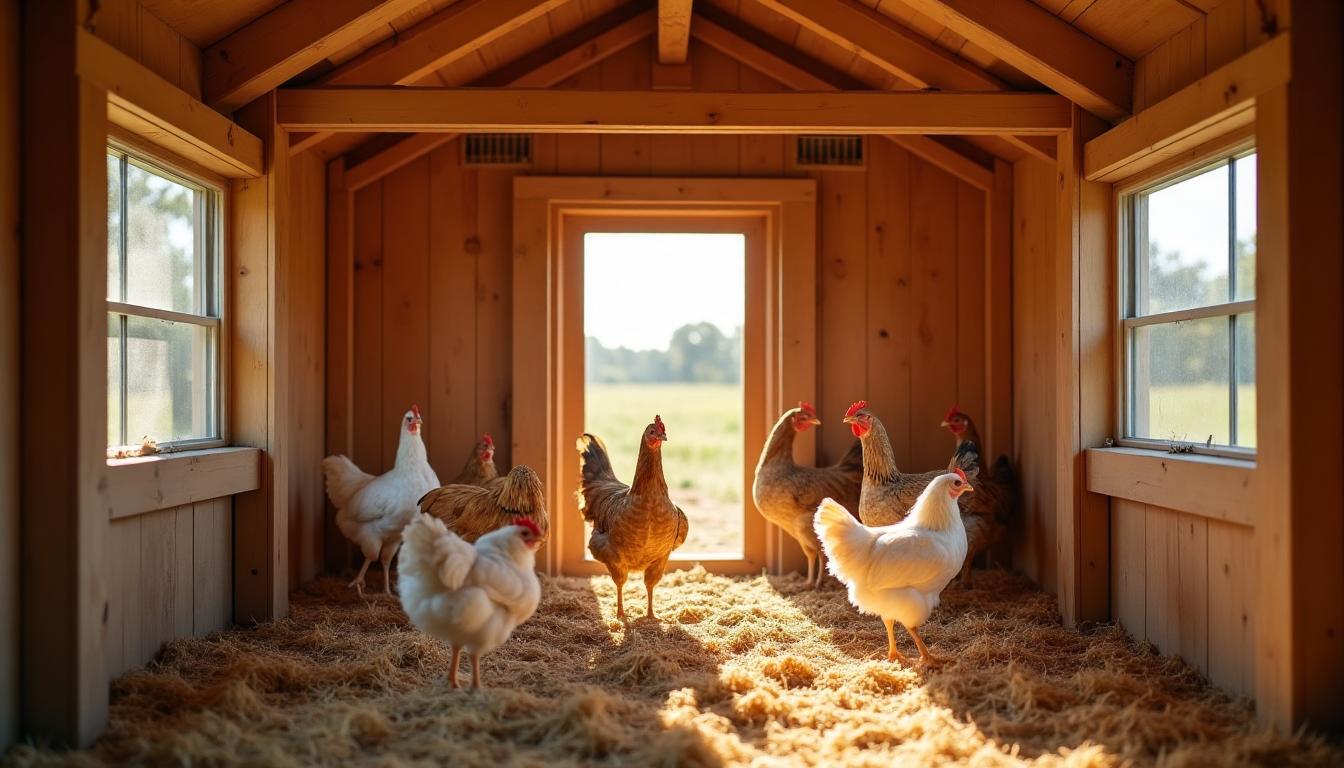
Building
Climate-specific ventilation designs, troubleshooting solutions, and cost-effective upgrades to prevent respiratory diseases and keep your flock healthy.
35 min read
Intermediate
$50-$400 upgrades
Critical Ventilation Facts
90% of health problems
prevented by proper ventilation
Air quality > temperature
chickens need fresh air, not warmth
1 lb moisture/bird/day
must be removed by ventilation
“I learned ventilation the hard way after losing birds to respiratory issues. After helping dozens of chicken keepers solve ventilation crises in Arizona’s extreme climate, I’ve learned that most ‘complicated’ coop problems trace back to inadequate airflow design.”
— Sarah Martinez, Backyard Chicken Expert
Why Proper Ventilation Matters More Than Temperature
Air quality directly impacts flock health more than temperature. Ammonia damage to respiratory tissue begins at just 5 ppm—well below the human detection threshold of 20 ppm. By the time you smell ammonia, your chickens have already suffered lung damage.
The Hidden Costs of Poor Ventilation
In my second winter, I sealed up my coop to keep birds “warm.” Within three weeks:
- • Respiratory infections in 4 of 6 birds ($180 in vet bills)
- • Frostbitten combs despite using a heat lamp
- • Eye irritation from ammonia buildup
- • 60% decrease in egg production
The solution was adding MORE ventilation, not less. Problems resolved in 10 days.
What Proper Ventilation Prevents
Respiratory Diseases
Mycoplasma, bronchitis, and aspergillosis thrive in poorly ventilated spaces. Average treatment cost: $150-300.
Frostbite
Caused by humidity, not cold. Ventilated coops in sub-zero temps have less frostbite than sealed coops.
Behavioral Problems
Ammonia stress triggers feather pecking. Well-ventilated flocks show 80% less aggression.
Heat Stress
Inadequate ventilation can kill birds in hours. Heat stress begins at 85°F and becomes lethal near 100°F.
The Science Behind Chicken Respiratory Needs
Chickens have completely different respiratory systems than mammals—they process oxygen through air sacs that extend throughout their body and even into hollow bones.
Key Differences Affecting Ventilation Design
- No diaphragm: Breathe by expanding entire body cavity
- Air sacs throughout body: Contaminated air affects more than lungs
- Higher respiratory rate: 15-30 breaths/min vs. human 12-20
- More efficient extraction: But also more efficient toxin absorption
The Ammonia Test
Squat to chicken height (about 12 inches above the litter) in your coop. If your eyes, nose, or throat burn, ammonia levels are already dangerous for your birds.
Calculating Your Ventilation Requirements
The Standard Formula
1 Square Foot of Ventilation Per Bird (Minimum)
Positioned near the roofline. Increase 2-3× for hot climates.
Ventilation by Flock Size
Flock Size Minimum Hot Climate Placement
Climate Adjustment Factors
Climate Zone Multiplier Priority
Climate-Specific Ventilation Designs
Hot, Dry Climate (Arizona, Nevada, Texas)
Priority: Maximum airflow and evaporative cooling
- • Replace solid walls with hardware cloth from 18” up
- • Hip or shed roof with 12-18” overhangs
- • Orient long axis east-west to minimize afternoon sun
- • Add solar-powered exhaust fans for extreme heat days
Cost for 8×12 coop: $530-790 (panels, overhangs, fan, misting)
Cold Climate (Northern States, Canada)
Priority: Moisture removal without creating drafts
- • Continuous ridge ventilation along roof peak
- • Protected soffit vents with closeable shutters
- • Deep litter method (8-12” bedding) for composting heat
- • Shield from prevailing winter winds
Never completely seal ventilation openings—even in extreme cold!
Humid Climate (Southeast, Gulf Coast)
Priority: Moisture removal and constant air movement
-
• Raised construction minimum 18” off ground
-
• Double roof with air gap for heat reduction
-
• Large overhangs (24-36”) to protect from rain
-
• Cupola or ridge vents for enhanced exhaust
Moderate Climate (Pacific Northwest)
Priority: Flexible ventilation for variable conditions
- • Hinged or sliding adjustable panels
- • Multiple small openings for better control
- • Account for seasonal wind pattern changes
- • Temperature-activated vent openers
Common Ventilation Mistakes (And How to Fix Them)
Troubleshooting Ventilation Problems
Retrofit Solutions for Existing Coops
Quick Assessment: Does Your Coop Need Retrofitting?
- Count all permanent openings (not doors)
- Measure length × width of each opening
- Add up total square feet
- Divide by number of birds
If result is less than 1 sq ft per bird, retrofitting is essential.
Retrofit Option Best For Cost Time Skill
Cost-Effective Ventilation Upgrades
Under $50
Hardware cloth panels
$20-35
Adjustable vent covers
$15-30
Ammonia absorbers
$25-40
$50-150
Wall panel conversion
$80-150
Solar exhaust fan
$80-120
Auto vent openers
$50-80
$150-400
Cupola installation
$150-300
Electric fan + thermostat
$120-200
Full ventilation retrofit
$250-400
Seasonal Ventilation Management
Summer Management
• Open all available ventilation
• Add supplemental fans if needed
• Monitor for heat stress signs
• Provide shade and cool water
• Consider misting systems
Winter Management
• Reduce inlet openings by 50% max
• Never close exhaust vents completely
• Monitor for condensation (bad sign)
• Use deep litter for composting heat
• Watch for frostbite on combs
Ready to Build a Well-Ventilated Coop?
Get our detailed building guides with proper ventilation specifications built in