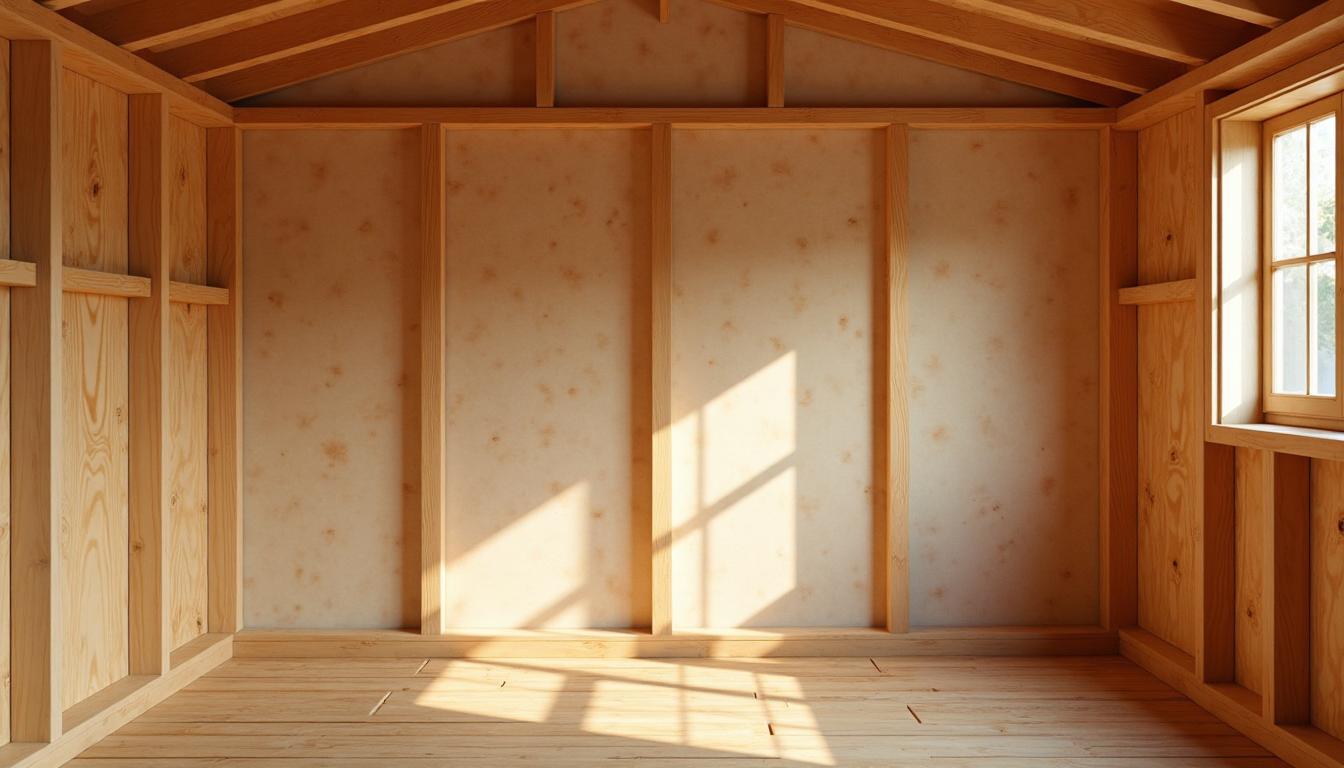
Most US backyard coops don’t need insulation. Chickens carry their own down coat and handle hard cold as long as the coop stays dry. Ventilation matters more than insulation — moisture from breathing and droppings is what causes frostbite, not cold air alone.
Insulation earns its keep in two situations: prolonged lows below 0°F, or summer highs above 95°F where the coop bakes in direct sun. This guide covers what to use, what it really buys you, how to winterize without it, and when supplemental heat is actually warranted.
The right mindset before you buy anything: insulation is a stabilizer, not a heater. The first job is a coop that stays dry, with high ventilation and no drafts at roost height. If the coop is wet or badly vented, foam board makes it worse, not better.
Insulating is far easier when you’re framing than when you’re retrofitting. Our 8×12 insulated cold-climate coop is drawn for it end to end — sheathing, house wrap, batts, vapor retarder, interior liner and a vented roof channel, in the order they go on. The 8×8 walk-in set frames conventional 2×4 walls at 16-inch centres that take a standard R-13 batt without modification.
Should You Insulate a Chicken Coop?
The short answer for most keepers: fix ventilation and draft control before you touch insulation. A dry, draft-controlled coop at 20°F is healthier than a damp, sealed coop at 35°F.
That said, insulation makes sense in a specific set of conditions.
Good reasons to insulate
- Winter lows regularly drop below 0°F (Alaska, North Dakota, northern Maine, northern Minnesota)
- Summer highs push above 95°F with the coop in direct sun — common in Arizona, Texas and Nevada
- Big swings between warm days and freezing nights stress birds that can’t thermoregulate
- Your coop has thin walls that shed heat almost as fast as the outside air changes
Insulation is optional if you have
- Mild winters where temperatures rarely stay below freezing for more than a night or two
- Cold-hardy breeds like Wyandottes, Plymouth Rocks or Australorps
- A well-built coop with good deep-litter management and controlled airflow
- A small flock of 4-8 birds generating body heat in a reasonably tight space
When insulation is the wrong first move
If the coop is wet, smells like ammonia, or shows morning condensation on the walls, insulation seals those problems in. Fix these first:
- Stop leaks at the roof, windows and door frames
- Add high ventilation to exhaust moist air without blasting the roosts
- Improve litter depth and replace wet patches immediately
- Block wind at roost height with baffles — not by sealing vents
For the full airflow strategy, read our guide to chicken coop ventilation before you buy a sheet of foam board.
Insulation vs. Ventilation: Why Moisture, Not Cold, Causes Frostbite
This is the most misunderstood idea in coop management. Frostbite on combs and wattles is rarely caused by cold air alone. It’s caused by humid air near the bird’s head.
The University of Minnesota Extension names the mechanism directly: the main causes of frostbite are high moisture plus cold, and condensation is what does the damage. Seal a coop to keep it warm and you concentrate every gram of water your flock produces.
The arithmetic is unforgiving. Count on roughly half a pound of water per hen per day from breath and droppings together — call it a gallon a day from eighteen hens. Insulation removes none of it.
The University of Kentucky’s poultry manual puts the priority in one line: moisture removal is the primary design consideration for cold-weather ventilation. Insulation changes how warm the coop is. Only the vent changes how wet it is.
Wet litter isn’t just unpleasant. USDA-ARS measured litter at 30% moisture releasing 1.8 times the ammonia of litter at 20%. Ammonia damages respiratory tissue from about 5 ppm, and people can’t smell it until roughly 20 ppm.
The correct order of operations:
- Eliminate drafts at roost height — gaps, cracks, low vents blowing on birds
- Add or improve high ventilation above roosting level
- Get litter management right — deep litter, replace wet spots, fix drainage
- Then, and only then, decide whether insulation adds anything
Best Insulation Materials for a Chicken Coop
Three things matter: R-value per inch, what happens when the material gets damp, and what happens when a chicken pecks it. They will peck it.
| Material | R-value/inch | Cost per 4x8 sheet | Pros | Cons | Best for |
|---|---|---|---|---|---|
| XPS rigid foam board (blue/pink) | R-5 | $25-$40 | High R-value, moisture resistant, easy to cut | Chickens peck it, seams leak air | Wall cavities and roof, must be covered |
| Polyiso rigid foam board | R-6 to R-6.5 | $30-$50 | Highest R-value per inch, lightweight | Loses R-value below freezing, must be covered | Roof insulation in cold climates |
| EPS rigid foam board (white beads) | R-3.8 | $18-$28 | Cheapest rigid option, easy to work | Lower R-value, absorbs some moisture | Budget builds, mild climates |
| Closed-cell spray foam | R-6 to R-7 | $1.50-$3.00/board ft | Air seals and insulates at once, fills odd gaps | Cost, fumes, hard to modify, must be covered | Gaps and seams, irregular framing |
| Kraft-faced fiberglass batt | R-3.1 to R-3.7 | $0.50-$0.90/sq ft | Cheap, fits 16” centres, facing doubles as vapor retarder | Must be fully lined, rodents nest in it | Stud and rafter bays behind a solid liner |
| Mineral wool (Rockwool) | R-3.7 to R-4.2 | $45-$65 | Handles moisture, fire resistant, dense | Costs more than fiberglass, must be enclosed | High-humidity climates |
| Reflective foil (Reflectix) | R-1 to R-1.3 | $25-$45 | Cuts radiant heat gain, easy to install | Near-zero cold-weather value, needs an air gap | Summer heat on roofs, hot climates only |
One rule with no exceptions: never leave insulation exposed. The University of Kentucky’s guidance on insulating a poultry house is blunt — birds shouldn’t be able to reach the insulation or the vapor barrier, and those materials attract rodents and insects as nesting material. A hen strips an open batt in about a week.
Our recommendation for most DIY builds: 1.5” XPS or polyiso between the studs, covered with 1/4” or 3/8” plywood inside. That’s R-7 to R-10, it shrugs off incidental moisture, and the plywood ends the pecking problem for good.
For the wider picture on framing lumber, siding and hardware, see our coop materials guide.
What R-Value Do You Need for a Chicken Coop?
R-value measures resistance to heat flow. The right target depends on your climate, not on a national standard. A coop has a small internal heat source — the birds — so over-insulating a small building traps moisture without adding useful warmth.
| USDA Climate Zone | Avg Winter Low | Wall R-value Target | Roof R-value Target | Notes |
|---|---|---|---|---|
| Zone 1 (Deep South, AZ/NV desert) | Above 20°F | None to R-5 | Reflective foil only | Summer heat reduction is the priority |
| Zone 2-3 (Mid-South, Pacific Coast) | 10-20°F | None to R-7 | R-7 to R-10 | Ventilation and draft control usually enough |
| Zone 4 (Mid-Atlantic, Pacific NW) | 0-10°F | R-7 to R-10 | R-10 to R-13 | Insulate if the coop has thin walls |
| Zone 5 (Midwest, New England) | -10 to 0°F | R-10 to R-13 | R-13 | Insulate walls and roof |
| Zone 6-7 (Upper Midwest, Mountain) | -20 to -10°F | R-13 to R-15 | R-13 | Full insulation, then evaluate supplemental heat |
| Zone 8+ (Alaska, northern Canada) | Below -20°F | R-15+ | R-13 | Consider supplemental heat and a heated waterer |
Those roof targets stop at R-13 on purpose, and the next section explains why going thicker there backfires.
What “R-13” actually buys you in a coop wall
R-13 is a label on a bag, not a measurement of your wall. The studs bridge straight through the insulation every 16 inches, and heat takes that shortcut.
Oak Ridge National Laboratory measured a 2x4 wall at 16-inch centres with R-11 batts, plywood outside and gypsum inside. They got R-13.6 at the centre of a cavity and R-9.6 whole-wall — about 70% of the cavity number. Their wall isn’t your wall, which is exactly why we quote it as theirs and publish no figure of our own.
The only R-value guidance any poultry extension source publishes is the University of Kentucky’s: good insulating materials run above R-10. A 3-1/2” batt clears that, and that’s the honest bar to design to.
The facing is the vapor retarder, and it faces into the coop. Kraft-faced fiberglass batt is the code’s own named example of a Class II vapor retarder, in IRC Table R702.7(1). The University of Kentucky puts it on the side of the material facing into the poultry house. Staple the flanges to the stud faces, paper toward you.
Never add polyethylene sheeting on top of that. Two vapor retarders on the warm side of one wall trap water between them with nowhere to go.
Reflective and Radiant Insulation for Summer Heat
In hot climates, reflective foil is worth understanding correctly before you buy it. It reflects radiant heat rather than resisting conducted heat. On a south-facing roof in July, that’s the load that matters.
The critical detail: reflective insulation needs an air gap to work. Staple it flat against the roof decking and you’ve wasted the money. Install it with a 3/4” to 1” gap on the interior side and you’ll get a real cut in heat gain.
What it doesn’t do is insulate against cold. R-1 to R-1.3 is nothing against a Minnesota January. Hot-climate keepers usually pair foil on the roof with rigid foam on the walls.
For shade placement, orientation and regional airflow strategy, see the climate-specific coop design guide.
How to Insulate a Chicken Coop: Step by Step
New build or retrofit, the sequence is the same. Skipping the first two steps is where most projects go wrong.
Step 1: Stop bulk water entry
Before any insulation goes in, the coop has to be dry. Check roof leaks and flashing, rain blowing through vents or around windows, door seals where wind drives water in, and drainage under the floor.
Wet insulation is worse than none. XPS handles incidental damp better than fiberglass, but nothing survives active water intrusion.
Step 2: Seal drafts at roost height
Walk the coop at bird height and feel for moving air. Your targets are gaps in wall panels, unsealed framing seams, and low vents aimed at roost level. Use exterior caulk or foam sealant, and weatherstrip the doors.
Do not touch the high vents during this step. You’re stopping cold air from blowing on birds, not stopping airflow.
Step 3: Sheathe and wrap, if there’s a batt going in the wall
This is the pair of layers nobody expects to buy. Lap siding hung straight on studs is fine over an empty stud bay — IRC R703.2 exempts an accessory building whose siding attaches directly to the studs from needing a water-resistive barrier.
Fill that bay with fiberglass and the outside face of the batt becomes the back of lap siding, which leaks air by design. Wind blows through the batt and the number on the bag isn’t in your wall. So sheathe the walls with 7/16” OSB, seams on framing.
That sheathing costs you the exemption. Siding is no longer attached directly to studs, so house wrap goes on: shingle-lapped upward, horizontal seams taped, cut and taped around every opening. Our 6×8 modern coop pays the same forfeit for the same reason, because its siding is furred off the studs.
Step 4: Install insulation with no exposed edges
Cut rigid board to friction-fit between studs and rafters, or friction-fit batts without compressing them. Split a batt around wires and pipes rather than crushing it behind them. Gaps at the edges become cold bridges and moisture traps.
Roof goes first. It’s the coldest surface in winter and the hottest in summer, so roof insulation returns the most per dollar of any location in the coop.
Step 5: Cover everything with a solid interior liner
This is non-negotiable. Use 1/4” to 1/2” plywood, fastened to the framing rather than into the foam. It protects the insulation, gives you a cleanable surface, and keeps rodents from moving in.
Line the returns too. Where the liner stops at a rough opening it leaves cut insulation facing the room, so wrap all four sides of every window, door and vent slot. Vent-slot returns are the ones people forget, because there’s no window there to make the gap obvious.
For floor systems that pair with insulation, see our guide to coop flooring.
Step 6: Restore and verify ventilation
After the liner goes on, check that every high vent is still clear. Sheathing a wall is the easiest possible way to close a vent by accident, because the panel is four feet wide and the slot is five and a half inches.
We size vents at 1 square foot of opening per 10 square feet of floor. That’s our own design default, not a published standard — the ratio you’ll see quoted everywhere online traces back to no verifiable source. What the authorities actually publish is an air-quality outcome: ammonia at or below 10 ppm at bird height, which Certified Humane sets for layers.
Put the vents above roost height so moisture leaves without drafting the birds. Ventilation is air exchange up high; a draft is air movement at bird level. Maximise the first and eliminate the second.
The Roof Cavity: The Part Everyone Gets Wrong
Insulating between the rafters moves the wettest cold surface in the building to the underside of your roof deck. A vented channel above the insulation is the only thing that dries it.
IRC R806.3 requires at least a 1-inch space between insulation and roof sheathing, including at the vent itself. Building Science Corporation’s attic-ventilation digest says the code minimum isn’t enough and recommends a minimum 2-inch clear airspace, because real installation tolerances rarely deliver a clear inch.
Do not upgrade the batt. A 2x6 rafter gives you a 5-1/2” bay. Take 3-1/2” of batt and the remaining 2” isn’t spare — it’s the channel.
Fill that bay with a 5-1/2” batt and the channel goes to zero. You don’t even get what the bag promises: Johns Manville’s own note is that R-19 compressed into a 5-1/2” cavity delivers R-17 to R-18. You’d trade a working roof for one point of R.
Baffles hold the channel open at the eaves, where the batt’s own thickness no longer does the job. That’s where R806.3’s phrase “at the location of the vent” comes from.
Two more details decide whether the assembly works. Seal the ceiling — caulk every edge and seam, because the ceiling is the air barrier keeping wet coop air out of the rafter bays. And keep the roof channel’s vent area separate in your head from the birds’ vent area; they’re two systems doing two jobs, and adding their square inches together gives you a flock ventilation number that doesn’t exist.
Our 8×12 insulated coop draws both air paths on dedicated detail sheets, at a scale where two inches of air is actually visible.
Cost to Insulate a Chicken Coop
The hardest number we can give you comes from our own bill of materials. The 8×12 walk-in shed coop costs $4,250-$5,450 in materials. The 8×12 insulated version of the same building costs $5,500-$7,100.
So the full insulation package — 11 sheets of OSB, house wrap, 260 sq ft of wall batt, 105 sq ft of roof batt, 12 sheets of plywood liner, baffles, flashing, weatherstrip and a removable winter skirt — runs about $1,250 to $1,650 on a 58 sq ft coop. Both figures come straight from the material lists those designs compute, at 2026 prices, with no waste allowance.
A foam-board retrofit is far cheaper because you’re skipping the sheathing and wrap. Rough material estimates using 1.5” XPS on walls, 3” on the roof, and plywood inside:
- 4x8 coop (32 sq ft floor): $80-$140. Around 3 sheets of foam plus 2 sheets of plywood.
- 8x8 coop (64 sq ft floor): $180-$280. Six or seven sheets of foam plus 4 of plywood.
- 8x12 coop (96 sq ft floor): $260-$400. Nine or ten sheets of foam plus 5 or 6 of plywood.
- 12x16 coop (192 sq ft floor): $450-$600 with spray foam on the seams.
Spray foam gets expensive fast if you fill whole cavities. Use it on gaps and seams and let rigid board or batt do the main work.
Common Insulation Mistakes
Mistake 1: Leaving foam board exposed. Chickens find it within hours. They peck it, shred it and eat pieces. Cover it with plywood before the birds go back in.
Mistake 2: Insulating, then closing the vents. This is the harmful one. People insulate, decide the coop is now “tight”, and shut vents to hold the warmth. Humidity spikes, walls sweat, litter stays wet and ammonia builds.
Mistake 3: Neglecting the floor and litter. Wet litter defeats everything else. If drainage is poor or water wicks up from the ground, you’ll fight ammonia no matter how good the walls are.
Mistake 4: Doubling up vapor barriers. Plastic sheeting over a kraft-faced batt traps water between two retarders. A coop has wildly variable humidity and no reliable way to drain a wall cavity, so pick one retarder on the warm side and stop there.
Mistake 5: Insulating a run. A run needs airflow. For winter wind, a clear plastic windbreak on the north and west sides blocks gusts and still lets sun in.
Worst-case combination: insulated, sealed tight, and wet litter. You get trapped ammonia, concentrated humidity and frostbite risk at once — while believing you did the right thing.
Retrofitting an Existing Coop
Most keepers aren’t insulating a new build. They’re improving a basic shed or a coop bought secondhand. One rule governs the whole job: don’t create hidden moisture pockets that can’t dry.
Path A — roof first. If you do one thing, insulate the roof. Staple radiant foil to the underside of the rafters with an air gap, add rigid board between rafters, and cover with plywood. Leave the channel above the insulation open.
Path B — draft control only. Plenty of coops don’t need insulation. They need cracks sealed and a baffle at roost level to redirect vent airflow up and over the birds. In zones 3-4 that’s often the entire fix, and it costs under $40.
Path C — board between studs plus a liner. If the coop is stick-framed with exposed studs, this is a clean retrofit. Pull any interior paneling, cut board to each bay, seal the edges and re-sheath the inside with plywood.
Keep access in mind. If the coop is already hard to clean, don’t add a layer that makes reaching the corners worse. On a small build like our 4×4 starter coop, a reach-in that’s already tight, draft control beats a thick wall build-up every time.
Winterizing: The Order That Actually Matters
A winter-ready coop is dry, draft-protected, vented high, easy to service and ready for a power cut. It isn’t warm, and chasing warm is what gets flocks into trouble.
The winter rule: dry, plus draft-free, plus high ventilation, beats hot almost every time.
Week one — make the coop weather-smart
- Fix roof leaks and dripping seams
- Block drafts at roost height: cracks, door edges, warped panels
- Keep high ventilation open and covered with hardware cloth
- Add a windbreak outside the run if it catches prevailing wind
- Replace wet bedding and dry the floor out
Week two — make winter care easy
- Set up your water-freeze plan, heated base or swap routine
- Prep a dry feed bin and a backup feeder
- Check every latch and the run perimeter before the snow
- Build a power-outage kit: spare containers, fuel, a light
- Decide on heat only if your conditions actually justify it
Good airflow vs bad airflow
| Good winter airflow | Bad winter airflow |
|---|---|
| High vents open, protected with 1/4” hardware cloth | Low vents or gaps aiming wind across the roost |
| Air enters gently and leaves near the roofline | Everything sealed so moisture can’t escape |
| Roosts sit out of any direct airflow path | Ammonia smell lingering after a clean-out |
| No condensation on walls or ceiling in the morning | Frost or condensation on walls and ceiling |
Mental model: you want a chimney, where wet air leaves high. You don’t want a wind tunnel at roost height.
Water freezing: the real winter problem
In most places winter stress has more to do with water than with cold. Frozen water stops birds drinking, feed intake drops, and body heat drops with it.
| Method | What it is | Pros | Watch out for |
|---|---|---|---|
| Swap warm water | Fresh water 2-3x daily | No power needed, cheap | Labour-heavy, brutal during storms |
| Two-waterer rotation | Spare thaws indoors, swap when frozen | Reliable and cheap | Needs a routine you’ll actually keep |
| Heated base | Heated plate under the waterer | Simple, widely used | Needs power and cord protection |
| Heated waterer | Built-in heated unit | Hands-off through cold snaps | Higher cost, cord safety |
Keep a no-power backup even if you run heated gear. Two spare containers and a swap routine cover the outage that always lands mid-storm.
The floor, and why we leave it empty
Our insulated design deliberately leaves the floor joist bays uninsulated. A closed insulated cavity under a coop is a rodent nest you can’t inspect or clean, and the University of Kentucky names soft insulation as attractive to rodents for exactly that reason.
The open space under a raised coop is also shade the flock uses all summer. So the floor gets a removable winter skirt instead — plywood panels screwed around the perimeter in November, off again in April. It stops wind washing under the building, and the summer shade survives.
Do You Need to Heat a Chicken Coop?
Usually not. Healthy adult cold-hardy birds — Buff Orpingtons, Plymouth Rocks, Australorps, Wyandottes, Brahmas, Jersey Giants, Chanteclers — handle serious cold with a dry coop and a draft-free roost.
The University of Minnesota Extension gives a supplemental-heat trigger below 35°F. Treat that as a conservative default rather than a rule, because hardy breeds tolerate far colder air when it’s dry.
Cold weather creates three real problems, and cold itself isn’t one of them:
- Moisture — humidity and ammonia inside the coop drive frostbite and respiratory disease
- Frozen water — birds dehydrate fast when the waterer ices over
- Frostbite on big combs and wattles — worst on roosters and Mediterranean breeds
When heat is genuinely warranted
Sustained deep sub-zero cold. Northern Minnesota, North Dakota, interior Alaska. A low-wattage radiant panel on a thermostat set around 35°F is sensible there.
Chicks under six weeks. They can’t thermoregulate yet and need brooder-level heat, starting near 95°F and stepping down about 5°F a week. That’s brooding, not coop heating — the brooder size calculator has the week-by-week schedule.
Sick or recovering birds. A small hospital pen with a low-wattage panel helps a bird who can’t hold her own body heat.
Outside those three, skip the heater. The added risks outweigh what you gain.
Why we don’t recommend heat lamps
A heat-lamp bulb runs a surface temperature above 480°F. Dry pine shavings ignite near 212°F. The lamp typically hangs from a clip clamp that loosens through heating and cooling cycles, a foot or so above that bedding, near birds that flap.
We’re not going to print a fire statistic, because the numbers circulating online don’t trace to a source we can verify. The temperature difference is enough on its own. Our recommendation is simple: use a flat-panel radiant heater instead.
Safer heating options, in order
Flat-panel radiant heaters. Surface temperatures run 165-200°F, far below anything that ignites bedding. Mount flat on a wall, run it through a thermostat outlet set to switch on near 35°F, and expect 100-200W and $70-$150.
Oil-filled or panel-style floor heaters. Warm to the touch at roughly 120-150°F, around 200W, $40-$90. They work when secured and thermostatted, but they sit at bird level where they can be knocked.
Ceramic heat emitters. Heat with no light, 60-150W, in a porcelain fixture rather than a clip clamp. Safer than a heat lamp because there’s no glass to break, but still second choice to a panel.
Don’t use: heat lamps, human room space heaters, propane or kerosene heaters, or a bare bulb as a heat source. The last one adds sleep disruption to the fire risk.
If you do heat, wire it properly: a thermostat outlet, a GFCI-protected outdoor cord sized for the load, no daisy-chained cords, no multi-tap strips. Test it in October by turning the thermostat up until it kicks on, then set it back.
Three non-electric moves that usually replace heat
Deep litter. Let bedding build to 8-12 inches over winter instead of scooping it out. Stir weekly with a fork so it doesn’t cake. Keepers report the composting pile running about 10°F above ambient — practitioner consensus rather than a lab number, but the University of Kentucky does state that flocks can do well at sub-zero temperatures on a deep litter system.
Seal drafts, leave the roofline open. Walk the coop on a still night with a candle and watch where the flame moves at roost height. Those are your draft points. The ridge, gable or eave vents above stay wide open all winter.
Eastern exposure and thermal mass. Face windows east so morning sun hits the coop early. A row of pavers or cinder blocks against the inside of a sunlit wall soaks up daytime heat and gives it back overnight. Crude, free, and it works.
Breed selection is the real cheat code
In cold country the biggest decision happens before you build anything. Cold-hardy breeds carry thick down and small combs, which is most of the frostbite problem solved.
Good cold-climate picks: Buff Orpington, Barred Rock, Australorp, Wyandotte with a rose comb, Brahma, Jersey Giant, Chantecler and Rhode Island Red. Avoid Leghorns, most Mediterranean breeds, and anything with a large single comb.
Cold and wet is a different problem
The Pacific Northwest, coastal New England and humid Midwest winters aren’t about extreme cold. They’re about sustained moisture, and the risks shift to bumblefoot, coccidiosis and respiratory disease.
For wet-cold, push roofline ventilation harder than you think you need, change bedding more often, and use kiln-dried shavings or sand rather than straw. Add a covered run extension so birds aren’t forced indoors every time it rains. Heat doesn’t help wet-cold — dryness does.
Frequently Asked Questions
Should you insulate a chicken coop?
Insulate only if your winter lows regularly drop below 0°F or summer highs exceed 95°F. Cold-hardy breeds tolerate hard cold if the coop is dry and draft-free at roost height. Ventilation matters far more — the University of Minnesota Extension ties frostbite to moisture and condensation, not to cold air. Most US backyard coops don’t need insulation, and adding it without adding ventilation traps humidity.
What is the cheapest way to insulate a chicken coop?
Rigid foam board (XPS or polyiso) at $25-$40 per 4x8 sheet is the cheapest effective option. Cover it with plywood so chickens can’t peck it. Avoid exposed fiberglass — chickens strip it and rodents nest in it. Budget $80-$140 in materials for a 4x8 coop.
Do you need insulation in a chicken coop for winter?
Most US climates don’t require it. Spend the winter budget on drafts, high ventilation and deep litter first. The University of Kentucky Extension notes that flocks can do well at sub-zero temperatures with a deep litter system. Insulation earns its keep in sustained sub-zero country, not in a normal cold snap.
Will spray foam insulation work for a chicken coop?
Yes, closed-cell spray foam gives the best R-value per inch (R-6 to R-7), but it runs $1.50-$3.00 per board foot and must be covered. It’s overkill for most backyard coops — rigid board is cheaper, DIY-friendly, and performs the same at typical coop wall depths.
Does reflective insulation work in a chicken coop?
It cuts radiant heat gain on a summer roof but gives you almost nothing against winter cold. It only works with a 3/4” to 1” air gap behind it. Use it on roofs and south-facing walls in hot climates, not as a substitute for cold-weather insulation.
Can I insulate the chicken run too?
No. A run needs airflow, not heat retention. Put a clear plastic windbreak on the north and west sides so wind is blocked but sunlight still gets in.
What R-value do I need for a chicken coop?
A 3-1/2” batt in a 2x4 wall clears the only R-value guidance any poultry extension source publishes — the University of Kentucky’s note that good insulating materials run above R-10. Our insulated 8x12 uses R-13 batt in the walls and R-13 in the roof. Going thicker in the roof backfires, because the batt then eats the vent channel above it.
Should I heat my chicken coop?
In most climates, no. Healthy adult cold-hardy birds handle hard cold when the coop is dry, draft-free at roost height, and vented at the roofline. Heat is genuinely warranted for chicks under six weeks, sick birds, and sustained deep sub-zero cold.
Are heat lamps safe in chicken coops?
We don’t recommend them. The bulb runs above 480°F and dry bedding ignites near 212°F, on a clamp that loosens with every heating cycle. Use a flat-panel radiant heater on a thermostat instead.
How do I keep my chicken coop warm without electricity?
Run deep litter 8-12 inches thick, seal drafts at roost height while leaving roofline vents open, and face windows east for morning sun. Keepers report deep litter running about 10°F above ambient — practitioner consensus rather than a lab measurement.
Should I close the coop vents in winter?
No. Closing high vents traps the moisture and ammonia your birds produce all night. Ammonia starts damaging respiratory tissue at 5 ppm, below the 20 ppm you can smell — so by the time the coop smells, harm has started.
How do I stop the water from freezing?
A heated base or heated waterer solves the real winter problem, which is dehydration rather than cold. Keep a no-power backup either way: two waterers, one thawing indoors, swapped morning and night.
Bottom Line
Most backyard coops need better ventilation and draft control, not insulation. If you’re in genuine sub-zero country or a climate where the coop bakes all summer, insulation earns its keep.
Do it in order. Stop the water, seal drafts at roost height, sheathe and wrap if a batt is going in the wall, insulate the roof before the walls, line everything with plywood, and leave the high vents open all winter. Done that way, a $150-$400 retrofit changes how your coop performs. Done out of order, it makes your moisture problem permanent.