Urban Living
Browse our full collection of free chicken coop plans to compare every design by flock size, style, budget, and climate. Small Space
35 min read
By someone who’s successfully kept chickens in three different city neighborhoods—and learned what actually works
Urban Success Formula
City chicken keeping is as much about human psychology as it is about chicken biology
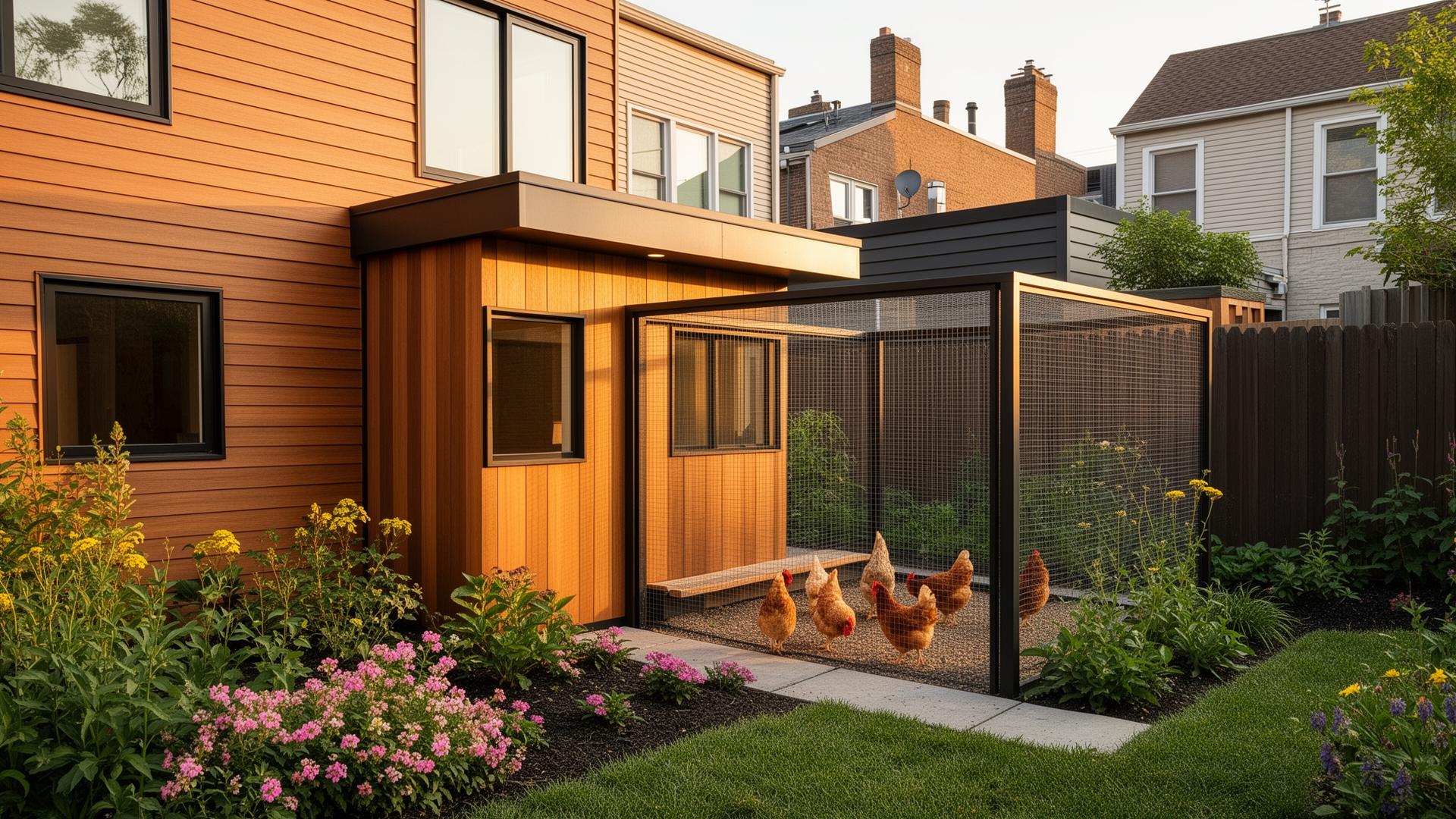
Urban chicken keeping requires completely different strategies than rural designs. When your neighbor is 8 feet away instead of 800 feet, when your backyard is 20×30 instead of 2 acres, and when city regulations dictate every aspect of your coop placement, standard chicken keeping advice becomes useless or even dangerous.
After successfully keeping chickens in Seattle’s Capitol Hill, Portland’s Hawthorne district, and Austin’s East Side—each with different challenges, neighbors, and regulations—I’ve learned that city chicken keeping is as much about human psychology and urban planning as it is about chicken biology.
This comprehensive guide provides urban-specific coop designs, neighbor relationship strategies, noise reduction techniques, and space optimization solutions that work in real city conditions.
For a tight lot, the 4×4 starter coop plans keep the whole footprint to 4 feet square with the run underneath the raised floor. The preview PDF is free; the complete cut-list book is $4.99 on Etsy.
Understanding Urban Chicken Keeping Challenges
City chicken keeping fails when rural strategies are applied to urban conditions. The physics, psychology, and politics of dense neighborhoods create unique challenges that require specialized solutions.
Urban vs. Rural: Critical Differences
Aspect Rural Approach Urban Requirement
Predator pressure Wild animals, periodic threats Urban predators, human theft
Noise tolerance No restrictions Strict ordinances, neighbor complaints
Aesthetics Function over form Must integrate with landscaping
Space planning Horizontal expansion Vertical optimization essential
Regulations Minimal oversight Complex permitting, inspections
Common Urban Failure Patterns
How Urban Chicken Projects Fail:
- Neighbor complaints (40%): Usually about noise, odor, or aesthetics
- Regulatory violations (25%): Permit issues, setback violations, bird limits
- Space inadequacy (20%): Overcrowding, behavioral problems, health issues
- Maintenance burden (10%): Daily care becomes difficult in tight spaces
- Security problems (5%): Theft, vandalism, predator access
Neighbor Relations: The Key to Urban Success
Your neighbors can shut down your chicken operation faster than any predator or disease. In my experience across three cities, neighbor support is the difference between a thriving urban flock and a forced removal within six months.
Pre-Launch Neighbor Strategy: 30-Day Timeline
Week 1: Initial Outreach
- • Visit immediate neighbors personally
- • Explain plans before construction
- • Listen to concerns and take notes
- • Share educational materials
Week 2: Address Concerns
- • Research solutions to worries
- • Modify plans for legitimate issues
- • Provide written answers
- • Show examples of well-managed coops
Week 3: Build Support
- • Offer to share eggs
- • Provide contact information
- • Show professional coop plans
- • Get written support letters
Week 4: Finalize
- • Document agreements
- • Establish communication protocols
- • Set construction expectations
- • Plan neighborhood introduction
Addressing Common Neighbor Concerns
“Chickens will smell and attract pests”
Facts to share:
- • Well-maintained coops produce less odor than many urban composters
- • Urban chickens eat scraps that would otherwise attract rats in garbage
- • Proper management creates no fly or rodent problems
Your commitments:
- • Daily coop cleaning and bedding management
- • Secure feed storage in rodent-proof containers
- • Immediate cleanup of spilled feed or food scraps
“Chickens will be noisy and disruptive”
Facts to share:
- • Hens produce 60-70 decibels (conversation level) vs. dogs at 85-90+ decibels
- • Roosters are typically banned in urban areas anyway
- • Chickens are most active during normal daytime hours
Your commitments:
- • No roosters (hens only)
- • Automatic door closers for containment
- • Sound dampening materials in coop
- • Limited flock size (3-6 birds maximum)
“Property values will decrease”
Facts to share:
- • Well-designed coops can increase property values as attractive landscaping features
- • Sustainable living features appeal to many modern buyers
- • Professional installation indistinguishable from garden shed or gazebo
Your commitments:
- • Professional design complementing architecture
- • Landscaping integration to enhance aesthetics
- • Willingness to modify if concerns arise
The Egg Diplomacy Strategy
- Regular egg sharing: 6-12 eggs monthly to immediate neighbors
- Holiday gifts: Baked goods made with fresh eggs
- Educational opportunities: Let neighbors’ children visit and learn
- Community events: Host backyard gatherings featuring the chickens
Space Optimization for Small Urban Lots
Urban lots demand creative space solutions that maximize chicken welfare while minimizing footprint. Vertical design, multi-purpose structures, and clever integration can make productive flocks possible in surprisingly small spaces.
Minimum Space Requirements for Urban Flocks
Flock Size Indoor Coop Outdoor Run Total Footprint
3 birds 12-18 sq ft 30-45 sq ft 42-63 sq ft
4 birds 16-24 sq ft 40-60 sq ft 56-84 sq ft
6 birds 24-36 sq ft 60-90 sq ft 84-126 sq ft
Vertical Design Strategies
- Elevated coops: Raise sleeping area, use space beneath for run extension
- Multi-level roosts: Staggered roosting at different heights
- Hanging feeders/waterers: Ground-free systems maximize floor space
- Wall-mounted nesting boxes: External access preserves interior room
For comprehensive placement strategies, setback compliance, and footprint optimization on lots under 1/4 acre, see our detailed small backyard chicken coop plans guide.
Noise Reduction Strategies and Design
Urban noise management can make or break your chicken operation. In my Portland neighborhood, noise complaints shut down three chicken projects within two blocks, while proper noise design allowed successful long-term operations.
Understanding Chicken Noise Patterns
Hen Vocalizations and Decibel Levels
Normal clucking: 60-65 dB (conversation level)
Alert calls: 70-75 dB (moderate noise)
Egg-laying announcements: 75-80 dB (brief bursts)
Comparison:
• Dogs: 85-95 dB (much louder)
• Lawn mowers: 85-95 dB (much louder)
• AC units: 60-75 dB (similar)
Quiet Breed Selection
Excellent Urban Choices (Quiet)
- Buff Orpington: Calm, docile, rarely squawk
- Sussex: Gentle nature, minimal vocalizations
- Australorp: Quiet, friendly, good urban adaptation
- Wyandotte: Mild-mannered, low noise production
Breeds to Avoid (Noisier)
- Rhode Island Red: Assertive, more vocal
- Leghorn: Active, alert, frequent vocalizations
- Bantams: Often noisier relative to size
- Game breeds: Naturally more aggressive and vocal
Sound Dampening Design
- Double-wall construction: Air gap between interior and exterior walls
- Sound-absorbing insulation: Fiberglass or acoustic foam in wall cavities
- Acoustic baffles: Sound-absorbing material in ventilation openings
- Living sound barriers: Dense evergreen plantings around coop
Aesthetic Integration and Property Values
Urban chicken coops must enhance, not detract from, neighborhood aesthetics. Coops that look like attractive garden features succeed long-term, while those that look like farm buildings create ongoing friction.
Design Styles for Different Urban Settings
Modern Urban
- Metal siding, flat/shed roof
- Grays, whites, blacks
- Clean lines, minimal ornamentation
- Best for: Contemporary neighborhoods
Traditional Urban
- Wood siding, shingle/gable roof
- Earth tones, heritage colors
- Decorative trim, window boxes
- Best for: Historic districts
Garden Pavilion
- Cedar, composite, glass panels
- Open sides, integrated seating
- Dual-purpose structure
- Best for: Small multi-use lots
Landscaping Integration
- Foundation plantings: Shrubs and perennials around coop base
- Pathway design: Attractive access routes using pavers or stepping stones
- Vertical gardening: Trellises, hanging gardens, climbing plants
- Seasonal interest: Plants providing year-round visual appeal
Proven Urban Coop Designs
The Urban Minimalist (3-4 birds)
- Footprint: 4×6 feet total
- Configuration: Elevated coop with run below
- Height: 8 feet total
- Cost: $600-1,200
Best for: Small lots, modern neighborhoods, noise-sensitive areas
The Garden Cottage (4-6 birds)
- Footprint: 6×8 feet total
- Configuration: Walk-in design
- Height: 7 feet interior
- Cost: $1,500-2,500
Best for: Traditional neighborhoods, larger lots, aesthetic focus
Navigating Urban Regulations and Permits
Major City Regulations Comparison
City Birds Allowed Permit Setbacks
Seattle 8 hens max No 10 ft from residences
Portland 3 hens max No 15 ft from residences
Austin 10 hens max No (registration) 10 ft from residences
Denver 8 hens max Yes (annual) 15 ft from residences
Chicago Prohibited N/A N/A
Research Process for Your Location
-
- City/county website: Search for “chickens,” “poultry,” or “livestock” ordinances
-
- Zoning office: Call to verify current regulations and permit requirements
-
- Animal control: Understand enforcement policies and complaint procedures
-
- Building department: Check if structural permits required
-
- HOA documents: Review CC&Rs for any restrictions
Urban Predator Protection Strategies
Urban predators are often more intelligent and persistent than their rural counterparts. City-adapted raccoons have learned to open complex latches, while urban coyotes have become more aggressive and less afraid of humans.
Urban Predator Profiles
Raccoons (Primary Threat)
- • Can open multi-step latches
- • Strong enough to tear hardware cloth
- • Often work in coordinated groups
- • Will hunt during day in urban areas
Domestic Dogs (Leading Cause)
- • Often loose in neighborhoods
- • Prey instinct triggered by birds
- • Legal complications with neighbors
- • Require relationship-based solutions
Layered Security Systems
- Perimeter: 8-foot fencing with lean-in tops and dig barriers
- Coop hardening: 1/2-inch hardware cloth, two-step latches
- Overhead protection: Complete netting coverage
- Technology: Motion cameras, smart lighting, automated doors
Urban Maintenance and Logistics
Daily Care Optimization
Morning Routine (15-20 min)
- • Quiet approach during sensitive hours
- • Quick health check
- • Food and water refresh
- • Egg collection
- • Security check
Evening Routine (10-15 min)
- • Final egg collection
- • Secure lockup verification
- • Food removal (pest prevention)
- • Quick cleanup
- • Tomorrow preparation
Urban Waste Management
- Tumbler composters: Contained, quick processing, neat appearance
- Worm composting: Compact, produces high-quality fertilizer
- Municipal programs: Some cities accept chicken manure
- Garden club sharing: Other gardeners may want composted manure
Troubleshooting Urban Problems
Urban chicken problems often have human solutions rather than technical solutions. Most issues involve neighbor relations, regulatory compliance, or space optimization.
“Your chickens are too noisy”
Immediate:
- • Monitor flock during complaint times
- • Implement quiet-time containment
- • Check for stressors causing excess noise
- • Adjust automatic door timers
Long-term:
- • Install sound dampening materials
- • Consider flock size reduction
- • Replace noisy breeds with quieter varieties
“Your chickens smell bad”
Immediate:
- • Deep clean coop and replace all bedding
- • Remove spilled feed or standing water
- • Check ventilation for blockages
Long-term:
- • Upgrade ventilation system
- • Implement daily waste removal
- • Relocate coop further from property lines
Violation notice received
Response Protocol:
-
- Understand the specific violation
-
- Review actual regulations
-
- Document current status with photos
-
- Implement immediate fixes
-
- Respond professionally in writing
-
- Request inspection to demonstrate compliance
Conclusion: Urban Chicken Success Through Human-Centered Design
Urban chicken keeping succeeds when we recognize that city environments require fundamentally different approaches than rural operations. The technical aspects of chicken care remain important, but they’re secondary to the human factors that determine long-term success.
The Keys to Urban Chicken Success:
- 1. Invest in neighbor relationships before you invest in construction
- 2. Understand and exceed regulatory requirements from day one
- 3. Design for aesthetics and integration rather than just function
- 4. Plan for noise and odor management as primary design factors
- 5. Maintain proactive communication with everyone affected by your operation
With proper attention to these factors, urban chicken keeping can thrive even in dense city neighborhoods. The key is understanding that in urban environments, success depends as much on managing human relationships as managing chicken welfare.