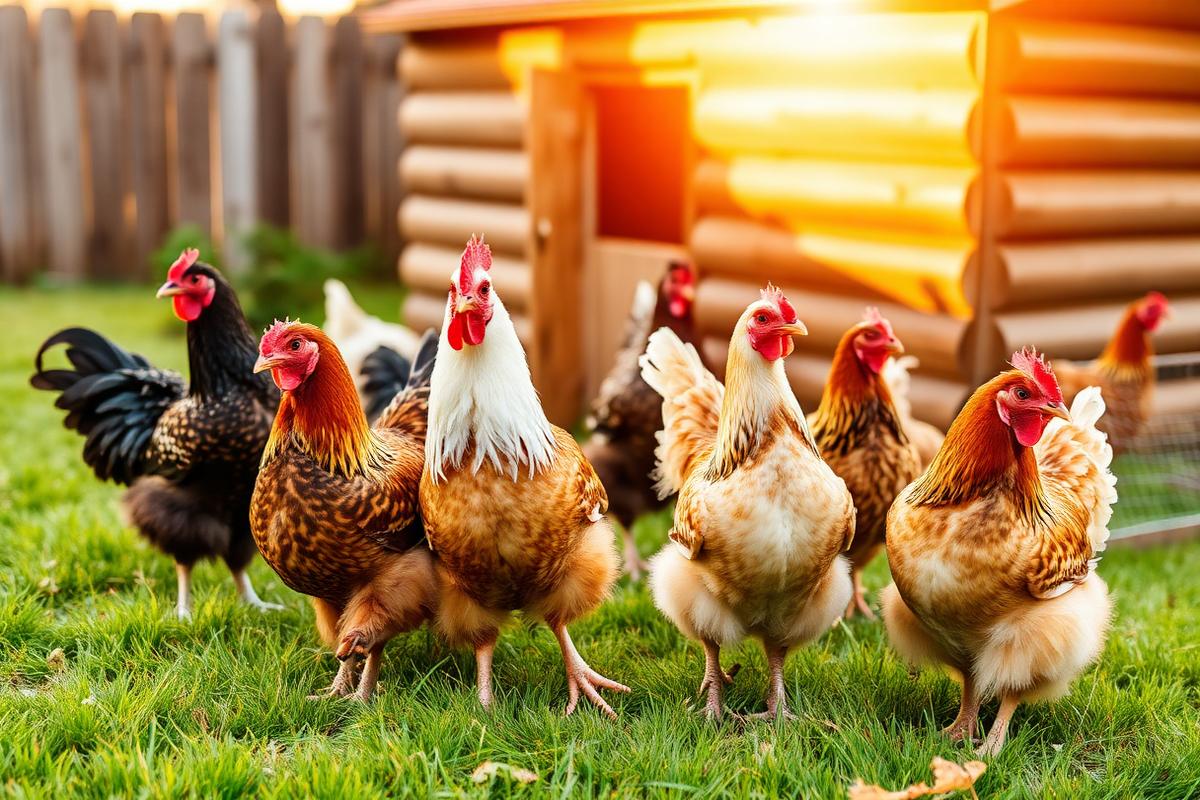
Choosing the wrong breed is the most common beginner mistake — and the hardest to fix. You can rebuild a coop in a weekend, but you’re committed to your chickens for 5–8 years. After helping 100+ first-time chicken keepers across Arizona select their flocks, I’ve narrowed down the breeds that thrive in backyard settings and the ones that cause regret.
Before you pick breeds, make sure your coop is sized correctly — use our free chicken coop plans to match your coop to your flock size. Breed selection and coop design go hand-in-hand: large breeds need more space, heat-tolerant breeds need different ventilation, and flighty breeds need taller fencing.
Whichever breed you pick, the chicks will need a brooder before they need a coop. The chicken brooder size calculator works out floor area, heat and feeder space by age.
Top 5 Breeds for First-Time Chicken Keepers
1. Rhode Island Red
The Toyota Camry of chickens — reliable, low-maintenance, and does everything well.
- • Eggs: 250–300 large brown eggs per year
- • Temperament: Independent, hardy, occasionally bossy
- • Climate: Excellent cold tolerance, good in heat
- • Space: 4 sq ft inside, 10 sq ft run (standard) — calculate your coop size
- • Best for: Egg production, low-maintenance keeping
2. Buff Orpington
The golden retriever of chickens — gentle, fluffy, and perfect for families with kids.
- • Eggs: 200–280 large brown eggs per year
- • Temperament: Extremely docile, loves being held, great with children
- • Climate: Excellent in cold, fair in extreme heat (heavy feathering)
- • Heads up: Goes broody frequently — great if you want chicks, annoying if you don’t
- • Best for: Families, pet chickens, cold climates
3. Plymouth Rock (Barred)
- • Eggs: 200–280 large brown eggs per year
- • Temperament: Friendly, curious, good with other breeds
- • Climate: Hardy in all conditions except extreme heat
- • Best for: Mixed flocks, beginners who want beautiful and productive birds
4. Australorp
- • Eggs: 250–300 large brown eggs per year (world record holder!)
- • Temperament: Calm, quiet, excellent in confinement
- • Climate: Good all-around, handles heat better than most large breeds
- • Best for: Maximum egg production with a calm personality
5. Easter Egger
- • Eggs: 200–280 per year in blue, green, pink, or olive shades
- • Temperament: Friendly, curious, each bird is unique in appearance
- • Climate: Good all-around
- • Best for: Families who want colorful egg baskets and unique-looking birds
Best Breeds for Hot Climates
If you’re in Arizona, Texas, or the Deep South, heat tolerance is non-negotiable. Chickens can’t sweat — they rely on panting and blood flow through their combs. Our Arizona chicken coop guide covers the coop modifications needed for extreme heat, but breed selection is equally important.
Breed Heat Rating Eggs/Year Notes
Leghorn⭐⭐⭐⭐⭐280–320Best layers, flighty Egyptian Fayoumi⭐⭐⭐⭐⭐150–200Desert-evolved, alert Minorca⭐⭐⭐⭐200–240Large white eggs Andalusian⭐⭐⭐⭐180–220Beautiful blue plumage
Avoid in Hot Climates Brahmas, Cochins, and Silkies have heavy feathering that acts like a down jacket in summer. These breeds suffer severely above 90°F and are not recommended for desert or subtropical climates.
Best Breeds for Cold Climates
Cold-hardy breeds need small combs (less frostbite risk) and dense feathering. Pair them with a properly insulated coop and you’ll get eggs through the coldest winters.
- Wyandotte: Rose comb resists frostbite. Beautiful laced plumage. 200–240 eggs/year.
- Brahma: The “King of Chickens” — massive, feathered feet, extremely cold-hardy. 150–200 eggs/year.
- Orpington: Dense down undercoat handles sub-zero temps. 200–280 eggs/year.
- Plymouth Rock: All-weather breed that keeps laying in winter. 200–280 eggs/year.
For winterization tips, see our winter chicken coop guide.
How Many Chickens Should You Start With?
Start with 3–6 hens. Chickens are social and need at least 3 companions, but more than 6 as a beginner creates unnecessary complexity.
- 3 hens: Minimum flock size. ~12–18 eggs/week. Perfect for a couple.
- 4–6 hens: Sweet spot for families. ~20–36 eggs/week. Fits a 4×4 to 4×8 coop.
- 6–12 hens: For egg-sharing with neighbors. Requires a larger coop — see our large coop plans.
Warning: “Chicken Math” Is Real Nearly every chicken keeper starts with 4 hens and ends up with 12+ within a year. Build your coop bigger than you think you need — or use modular/mobile designs that expand.
Matching Breeds to Your Coop Design
Your breed choice directly impacts coop requirements. Our chicken coop plans specify space per bird, but here’s the breed-specific breakdown:
Breed Size Coop Space Run Space Roost Length Example Breeds
Bantam2 sq ft5 sq ft6”Silkies, d’Uccles Standard4 sq ft10 sq ft8–10”RIR, Orpington, Plymouth Rock Large / Giant5–6 sq ft12–15 sq ft12”Brahma, Jersey Giant
Use our coop size calculator to get exact dimensions for your chosen breeds and flock size.
Where to Buy Chicks
- Local farm stores: Tractor Supply, Rural King, and local feed stores carry chicks in spring. Limited breed selection but you can see birds in person.
- Hatcheries (mail order): Murray McMurray, Cackle Hatchery, Meyer Hatchery. Widest breed selection, shipped as day-old chicks. Order early — popular breeds sell out by February.
- Local breeders: Best for rare breeds and quality stock. Check Craigslist, Facebook groups, and poultry swap meets.
- Started pullets: 16–20 week old hens ready to lay. More expensive ($15–30 each) but skip the brooding phase entirely.
Frequently Asked Questions
Can I mix different breeds in one coop?
Yes — most backyard flocks are mixed breeds and they get along fine. Avoid mixing very large breeds (Brahma) with bantams, as size differences can lead to bullying. Introduce new birds gradually, ideally at night.
Do I need a rooster for hens to lay eggs?
No. Hens lay eggs with or without a rooster. You only need a rooster if you want fertilized eggs for hatching chicks. In fact, most urban areas prohibit roosters due to noise — check your local regulations before getting one.
When do chickens start laying eggs?
Most breeds begin laying at 18–24 weeks (4.5–6 months). Production breeds like Leghorns start earlier (16–18 weeks). Heavy breeds like Brahmas may not lay until 28+ weeks. First eggs are often small and irregular — production normalizes within a few weeks.
How long do chickens live?
Backyard chickens typically live 5–8 years with proper care. Production breeds lay most eggs in years 1–3, then taper off. Heritage breeds lay fewer eggs per year but maintain production longer. Either way, build your coop to last — our chicken coop plans use materials rated for 15+ years.