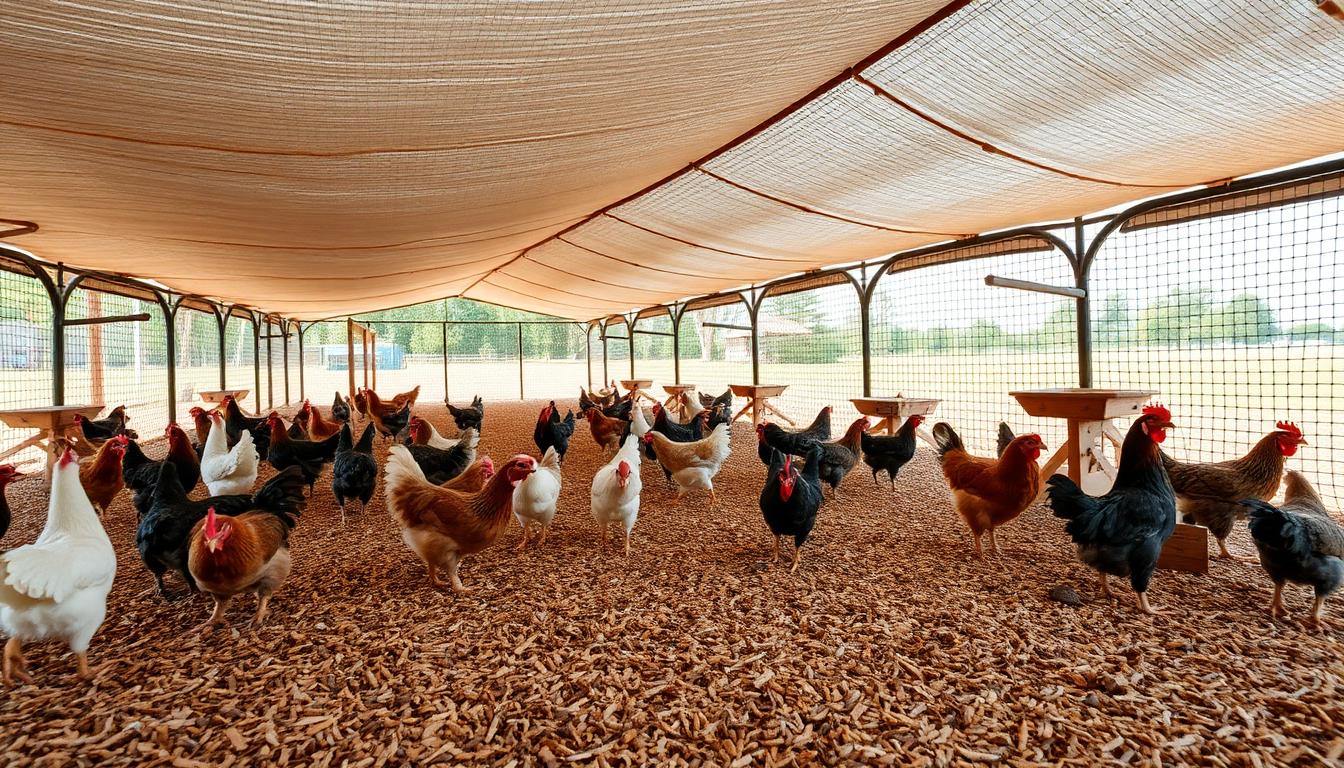
A chicken coop keeps birds safe at night. A chicken run is where they live most of their daylight hours—scratching, sunbathing, dust bathing, and working out the social pecking order. That makes chicken run design one of the biggest quality-of-life upgrades you can build: more space, better airflow, fewer behavior problems, and dramatically less “mystery loss” risk from predators.
Big Picture
A great run is roomy, dry, secure, and interesting. If you nail those four, almost everything else becomes easier.
Most of our free chicken coop plans include an attached screened run framed at the same width as the coop — the 8×12 walk-in set adds the shaded bay under its raised floor — and there are three standalone walk-in runs if the coop is already built.
What a “Good” Chicken Run Does
A run isn’t just a fenced rectangle. It’s an outdoor habitat. The best runs solve for three competing problems: predator pressure, space constraints, and bird behavior. If your run design ignores any one of those, you end up “fixing” it forever with patches.
Safety Goals
- • Resist prying, chewing, climbing, and digging predators
- • Prevent hawk strikes with overhead protection
- • Keep the run dry enough to avoid disease and foot issues
- • Make it easy for humans to lock/unlock reliably every day
Quality-of-Life Goals
- • Enough room to move without constant confrontation
- • Shade and a dust bath area (non-negotiable)
- • Visual breaks to reduce bullying and stress
- • Enrichment that keeps birds busy (less feather picking)
Short on space?
Use a long “runway” layout + shade + enrichment. It feels bigger to chickens than a square box.
Run Size Calculations (Real-World Planning)
When people ask “how big should my run be,” the honest answer is: as big as you can make it while still keeping it secure and manageable.
A Practical Sizing Range
If birds spend most days in the run (no free-ranging), plan more square footage per bird. If they free-range often and the run is mainly a safe base, you can be on the lower end—especially if you build enrichment and vertical space.
Management Style Suggested Range Notes
Run-only (no free-range) 12–20 sq ft per bird More space + more enrichment = fewer conflicts and less mess
Mixed (some free-range) 8–12 sq ft per bird Works well if you provide shade + dust bath + perches
Mostly free-range 6–10 sq ft per bird Run becomes “safe zone” and weather shelter
Hidden Truth
“Square footage” isn’t the whole story. Chickens care about usable space—dry zones, shade zones, and visual breaks reduce conflict more than just adding area.
Vertical Space Counts (If You Build It Right)
Chickens don’t fly like parrots, but they absolutely use height: low platforms, perches, stumps, and ramps. Adding vertical features can make a run feel bigger while improving pecking-order dynamics—lower birds can escape higher birds.
Layout Patterns That Feel Bigger Than They Are
If you have limited yard space, layout is your cheat code. The goal is to avoid a single “dead center” where dominant birds can control the whole run. You want flow, corners that break sight lines, and multiple “stations.”
Three Layout Patterns That Work
- The Runway
- • Long and narrow (e.g., 6×20, 8×24)
- • Creates movement, not clumping
- • Easy to divide into zones
- The L-Shape
- • Wraps around a coop or shed
- • Creates a “turn” = natural sight break
- • Good for small yards and side yards
- The Split Run
- • Two connected runs or a divider gate
- • Lets you rotate ground and reduce mud
- • Separate birds temporarily if needed
Zones to Include (Even in a Small Run)
- Dry zone: roofed area or deep bedding area that stays usable after storms
- Shade zone: natural shade, shade cloth, or a solid roof section
- Dust bath zone: covered bin or corner with sand/soil/ash mix
- Activity zone: perches, stumps, hanging greens, treat toys
Fencing Options and Predator-Proofing
Fencing choice is where most runs either become “set-it-and-forget-it” or “constant repairs.” The right choice depends on your predators, your budget, and how permanent the run is.
Material Strength Best Use Weakness
Hardware cloth High Lower walls, vents, predator-heavy areas Costs more; needs lots of fasteners
Welded wire Medium–High Main wall panels where predators are moderate Larger openings may allow small predators
Chain link Medium Large perimeter fencing with added skirt + roof Needs reinforcement at the bottom
Chicken wire Low Keeping chickens in (temporary) Can be torn, chewed, or pried by predators
The “Frame Matters” Rule
A strong mesh on a weak frame still fails. The mesh has to be supported by framing that doesn’t warp, rack, or create gaps. Tight corners and doors are the weak points.
Common Mistake
Stapling mesh to thin wood and calling it done. Use screws + washers (or fencing staples designed for the job) and give predators nothing loose to pull.
Roofing and Overhead Protection
If hawks exist where you live, overhead protection is not optional. Even if hawks don’t, a roof makes runs cleaner and drier. “Dry run = lower smell, fewer flies, fewer foot problems, easier winter.”
Solid Roof (Metal/Polycarbonate)
- Best for mud control and weather shelter
- Makes run usable in rain/snow
- Costs more; needs stronger framing
Netting / Wire Top
- Lower cost, easier retrofit
- Stops hawks and climbing predators
- Doesn’t keep the run dry
Shade Matters as Much as Security
A fully exposed run becomes a heat trap, and chickens will huddle in the only shadow—creating a poop hotspot and bullying hotspot. Even a small shaded zone can change flock behavior for the better.
Dig Protection (Aprons, Skirts, Buried Barriers)
Many predators don’t “dig a tunnel” like in cartoons. They scratch at the fence line until something gives. The goal is to make the ground line a dead end. You have two main strategies:
Apron (Predator Skirt)
- • Mesh extends outward on the ground from the fence base
- • Predators dig at the fence line and hit wire immediately
- • Easier than digging trenches; great retrofit option
Buried Barrier
- • Mesh is buried down a set depth along the perimeter
- • Works well for permanent runs
- • More labor; tricky in rocky soil
Pro Tip
Put extra attention on corners and door thresholds. Predators probe corners first. Door gaps are “free wins” for them.
Doors, Latches, and Human Access
The best predator-proof run still fails if you hate using it. Human access is not a luxury—it’s what determines whether you maintain the run. Plan for two types of access: a daily door and a “get in there with a rake” door.
Door Design Rules
- Daily door: easy, quick, consistent to latch (you’ll do it every day)
- Service door: wide enough for a wheelbarrow, rake, or bedding tote
- Door frame: build it stout so it doesn’t warp and create gaps
- Latches: use a primary latch + secondary clip/carabiner in predator-heavy areas
Human Comfort Matters
If you can walk into the run without crawling, you will clean it more. If you have to crouch and squeeze, the run will slowly degrade.
Ground Management (Mud Control, Drainage, Bedding)
The ground is what makes runs “pleasant” or “gross.” Mud and wet litter create odor, flies, and foot issues. You don’t need a fancy system—just decide your approach intentionally.
Three Ground Strategies
- Dry Bedding Run
- • Deep-ish layer of wood chips/leaves/straw
- • Scatter scratch grains in it for natural foraging
- • Best with partial roofing to keep it from soaking
- Bare Earth + Rotation
- • Works if you can rotate pens or open/close sections
- • Needs good drainage and time to rest
- • Enrichment must be moved to avoid dead spots
“Always Mud” Warning
If your run is low, shaded, and unroofed, it will become mud in wet seasons. Fix is typically: raise it, slope it, add drainage, roof part of it, and add bedding.
Drainage Shortcuts That Work
- Build the run on the highest spot you can
- Give the run a slight slope away from the coop
- Add a roofed dry corner where birds can stand when the rest is damp
- Use a sacrificial “wet zone” near the waterer and keep it easy to refresh
Enrichment Features That Reduce Boredom and Conflict
The fastest way to create bullying, feather picking, and stress is to trap birds in a run that has nothing to do. The goal of enrichment is not “cute accessories.” It’s to increase choices: different places to stand, hide, peck, scratch, and rest.
Best ROI Features
- Shade: solid roof section or shade cloth
- Dust bath: covered bin or corner (stays dry)
- Perches/platforms: low, stable, multiple heights
- Hanging greens: cabbage head or leafy bundle
- Foraging bedding: scatter scratch grains in chips
”Better Than Nothing” Add-ons
- Stumps/logs/branches for hopping
- Visual breaks (panel, shrub-in-a-pot, pallet wall)
- Rotating toys (pecking block, treat dispenser)
- Multiple feeder/waterer locations
Quick Bullying Fixes Inside a Run
- Add a second feeder and waterer far apart
- Add a privacy panel so birds can break line of sight
- Add a second shade zone
- Add a platform so timid birds can “escape upward”
Design for Pecking Order
Enrichment is also social engineering. Dominant birds control chokepoints: single perches, single shade, single feeder. Give the flock multiple stations and multiple paths. That’s how you reduce conflict without micromanaging birds.
Build Checklist
Must-Haves
- • Secure fencing (avoid weak mesh in predator-heavy areas)
- • Overhead protection (hawks + climbing predators)
- • Dig protection (apron or buried barrier)
- • Stout doors + reliable latches
- • Shade + dust bath zone
High-Value Upgrades
- • Roofed dry corner
- • Split run or gate to rotate ground
- • Multiple feeding/watering stations
- • Platforms/perches for vertical space
- • Visual breaks for bullying control
Maintenance Plan (Simple)
- Weekly: rake high-traffic areas, refresh dust bath, check latches and mesh tension
- Monthly: add/refresh bedding or chips, inspect perimeter corners and door thresholds
- Seasonal: adjust shade/roofing for weather, rotate zones, deep clean and reset
Bottom Line
Great chicken run design is simple: build the largest secure space you can, keep part of it dry, protect the perimeter and overhead, and add enrichment that creates multiple “stations.” If your run stays safe and interesting, your chickens behave better and your maintenance drops.