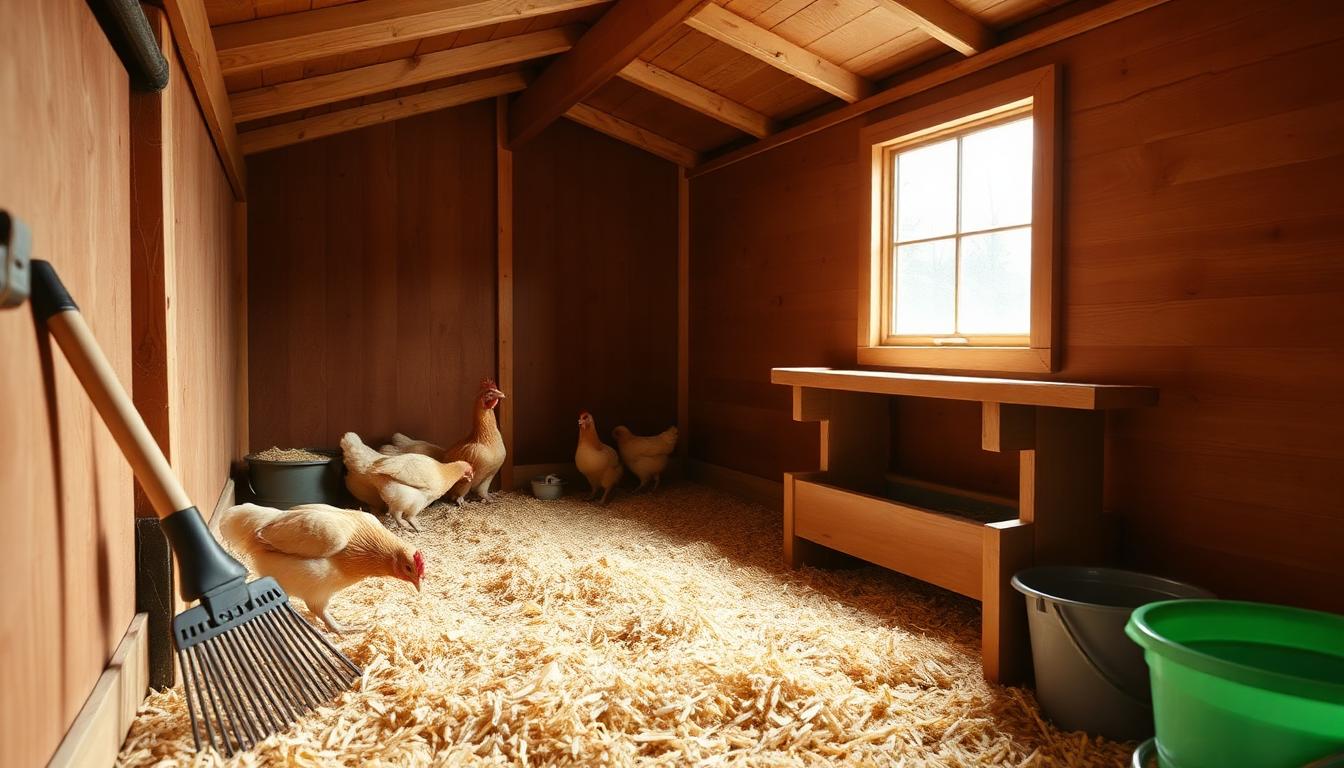
The easiest way to stay on top of chicken coop cleaning is to stop thinking in “big clean-outs” and start thinking in tiny routines. Five minutes daily prevents wet litter and ammonia. A short weekly reset prevents buildup under roosts. A seasonal deep-clean fixes the stuff you can’t see: cracks, mites, and hidden moisture.
Non-Negotiable
Odor comes from moisture + waste. Keep it dry, and you’ve solved 80% of coop problems.
Trigger Rule
If you smell ammonia when you open the coop, clean today. Your birds are breathing that all night.
Cleaning time is mostly decided at framing. The 8×8 walk-in plan gives full standing headroom so the job is a rake rather than a crawl; the smaller free plans open a full side panel instead.
Cleaning Principles (What Matters Most)
A “clean coop” is not a spotless coop. It’s a coop that stays dry, doesn’t trap ammonia, and doesn’t let parasites build up. Before you copy any schedule, lock in these principles:
What Causes Most Coop Problems
- • Wet litter: water spills, roof leaks, poor drainage, condensation
- • Manure hotspots: under roosts and in corners
- • Poor airflow: moisture and ammonia don’t leave
- • Hidden cracks: mites and lice live there, not in “open space”
What “Good Maintenance” Looks Like
- • Wet spots removed quickly and replaced with dry carbon bedding
- • Under-roost area stays manageable (scraped weekly)
- • Nest boxes stay fresh so eggs stay clean
- • Seasonal resets catch parasites before they explode
Daily Chicken Coop Cleaning Tasks (5 Minutes)
Daily tasks are “preventive maintenance.” You’re not cleaning the entire coop—you’re removing the conditions that turn into smell and sickness.
Task How to Do It Fast Health Reason
Wet spot removal Scoop out damp bedding near waterers/corners; replace with dry Wet waste drives ammonia and bacterial growth
Nest box reset Remove manure clumps; fluff bedding; remove broken eggs Cleaner eggs; less bacteria load in nests
Quick roost zone glance Spot scrape if buildup is obvious; don’t let it cake Roost area is the #1 manure hotspot
Water sanity check Fix leaks/spills immediately; keep water clean Spills create the worst wet litter zones
Feed spill sweep Remove spilled feed and close feed bins Reduces rodents and flies
Fastest Win
Put water on a stable base and keep it from spilling. It cuts cleaning in half.
Weekly Tasks (15–30 Minutes)
Weekly cleaning prevents manure from hardening into “cement,” keeps bedding dry, and keeps parasite pressure low. This is the routine that keeps your coop from ever becoming a disaster.
Weekly Checklist
- Scrape under-roost manure and corner buildup
- Refresh bedding where it’s thinning or damp-prone
- Clean waterers (biofilm scrub) and refill fresh
- Wipe roost bars/ledges if manure is caking
- Quick mite check at roost ends and cracks
Weekly Red Flags
- • Ammonia smell = increase airflow and remove wet litter immediately
- • Constant wet bedding = water station problem or roof/drainage problem
- • Dirty eggs = nest boxes need more frequent bedding refresh
Monthly Tasks (30–60 Minutes)
Monthly tasks are where you prevent slow creep problems: hidden damp pockets, parasite hideouts, and hardware that loosens. Many “mystery illnesses” start with a coop that gradually stopped staying dry.
Monthly Checklist
- Partial bedding replacement: remove the dirtiest areas fully and reset with fresh dry bedding
- Nest box refresh: replace nest bedding completely and wipe surfaces
- Vent/airflow check: clear dust buildup and confirm air can move without drafts on roosts
- Door/latch inspection: tighten hardware, check gaps, prevent rodent entry
- Crack inspection: look for parasite hideouts; tighten/repair loose trim and roost mounts
Pro Move
Choose one “monthly maintenance day” and keep it consistent. Consistency beats intensity.
Seasonal Deep-Clean (Spring/Fall)
Seasonal deep-cleaning is a reset: remove accumulated waste, clean surfaces, fix hidden issues, and restart with clean bedding. Many keepers do this in spring and fall, but humidity, rainfall, and bedding method can change your timing.
Deep-Clean Steps (Simple Order)
- 1 Move birds to a safe temporary pen/run
- 2 Remove bedding (or remove most of it if deep litter is still healthy)
- 3 Dry scrape first (caked manure comes off easier dry)
- 4 Wash/wipe surfaces (roosts, nest boxes, floor, walls)
- 5 Dry thoroughly before re-bedding
- 6 Inspect and repair cracks, leaks, and latches
- 7 Reset bedding with fresh dry carbon material
- 8 Inspect for mites/lice and reset dust bath areas
Don’t Skip Drying Time
Trapping moisture after a deep-clean can create worse ammonia and mold pressure than before.
Health Considerations (Ammonia, Dust, Parasites)
The health risks tied to poor coop cleaning are mostly environmental: ammonia, dampness, dust overload, and parasites. The cleaning schedule is about reducing those exposures.
Ammonia
Ammonia forms when waste breaks down in wet conditions. Even if a coop “looks fine,” ammonia can build in cold, closed conditions. If you smell it, take action immediately: remove wet litter and improve airflow.
Dust
Dry bedding reduces ammonia but can increase dust. The fix is not “make it wet.” The fix is balanced bedding choice, good ventilation, and avoiding super-powdery materials.
Parasites
Mites and lice hide in cracks and roost joints. Cleaning removes habitat, but you also want smooth surfaces, tight seams, and regular inspections of roost ends and corners.
Bedding Methods and How They Change Schedules
Your bedding plan determines your workload. Two common approaches:
Spot-Clean + Refresh (Beginner-Friendly)
- Daily: remove wet spots and obvious messes
- Weekly: scrape roost zone and top off bedding
- Seasonal: full clean-out/reset
Deep Litter Method (Works When Managed)
- Weekly: stir litter and add dry “carbon” material
- Monthly: remove compacted wet zones
- Reset when needed: don’t force it if it gets wet or smelly
Deep Litter Warning
If it’s damp and smells, it’s not “deep litter”—it’s just wet waste. Reset sooner and fix the moisture source.
Design Upgrades That Cut Cleaning Time
If you’re designing or upgrading your coop, these features reduce cleaning effort more than any product:
- Droppings board under roosts: scrape a flat board instead of digging through bedding
- Removable roosts: pull, scrape, return. Easy inspections for mites
- Easy-access doors: if you can step in, you’ll actually clean
- External nest boxes: faster bedding swaps and egg collection
- Stable water station: fewer spills = less ammonia
If You Only Build One Upgrade
Droppings board. It turns cleaning from a chore into a 2-minute scrape.
Bottom Line
A simple chicken coop cleaning schedule is: daily wet-spot removal and nest resets, weekly roost-zone scraping and waterer cleaning, monthly inspection resets, and a seasonal deep-clean. If you keep the coop dry and ventilated, you’ll prevent most health issues before they start.
Safety Note
Dust and ammonia can irritate lungs. Consider a dust mask during deep-cleaning and always let the coop dry before re-bedding.