Building
Real-world durability testing, current 2025 pricing, and regional supplier recommendations
Sarah Martinez | Coop Builder & Materials Tester
December 2025
35 min read
Quick Overview
Difficulty
All Levels
Content Type
Materials Guide
Budget Range
$200 - $2,000+
Materials Tested
40+ Combinations
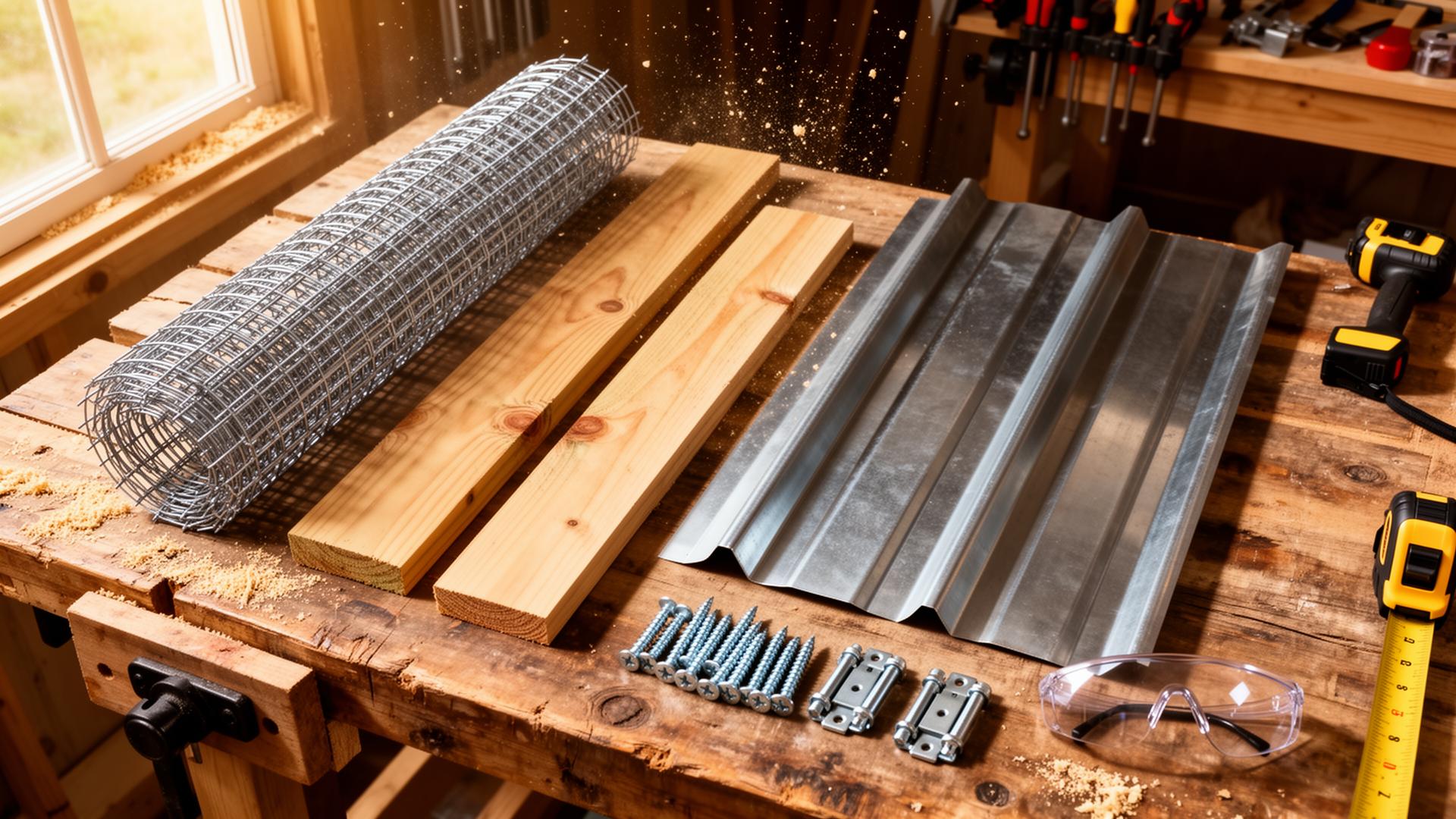
Choosing the right chicken coop materials can save you $500+ in replacement costs and countless hours of frustrated rebuilding. After testing dozens of lumber types, roofing materials, and hardware combinations in extreme desert conditions, I’ve identified the exact materials that provide the best value at every budget level.
This guide contains real-world durability data from 5+ years of Arizona sun, monsoon storms, and persistent coyotes—plus current 2025 pricing from major suppliers. Whether you’re building a $200 starter coop or a $2,000 permanent structure, these tested recommendations will help you build once and enjoy for years.
Material Categories & Budget Overview
Chicken coop materials fall into distinct budget tiers, each with specific trade-offs between upfront cost and long-term durability. Understanding these tiers prevents the common mistake of mixing incompatible quality levels.
2025 Budget Categories (4x4 Coop Example)
- Budget Build ($200-350): 3-5 year lifespan, basic protection
- Standard Build ($350-600): 8-12 year lifespan, good durability
- Premium Build ($600-1,000): 15-25 year lifespan, maximum convenience
- Professional Build ($1,000+): 20+ year lifespan, commercial-grade materials
The “Weak Link” Principle
Your coop is only as durable as its cheapest component. Mixing $300 cedar lumber with $15 chicken wire creates a beautiful coop that fails catastrophically when predators break through the cheap fencing. Every material choice should align with your overall durability target.
Common Mismatch Mistakes
- Premium lumber + cheap hardware cloth: Beautiful coop, dead chickens
- Quality frame + bargain roofing: Structure rots from water damage
- Expensive automation + basic construction: Electronics fail when structure shifts
Regional Material Considerations
Climate dramatically affects material performance and availability:
Desert Southwest
- • UV degradation: Plastics fail in 1-2 years
- • Extreme heat expansion issues
- • Monsoon challenges require drainage
Humid Southeast
- • Rot acceleration in 2-3 years
- • Termite and carpenter ant pressure
- • Excellent hardwood availability
Cold Northern States
- • Freeze-thaw cycles crack materials
- • Snow load: 20-40 lbs per sq ft
- • Cedar and pine readily available
Lumber Guide: What Lasts vs. What Fails
Lumber represents 40-60% of your material cost and determines structural integrity for decades. My testing reveals dramatic performance differences that standard lumber grades don’t capture.
Pressure-Treated Lumber Performance
Modern ACQ-Treated Pine (Current Standard)
Tested lifespan: 12-18 years in Arizona conditions
Current pricing: $6.50-8.50 per 2x4x8’ (December 2025)
Best for: Ground contact, foundation elements, structural framing
Avoid for: Interior surfaces where chickens might peck (copper content)
Real-world test results: Pressure-treated skids placed on gravel in 2019 show zero rot or insect damage after 6 years. Copper-based treatment proves highly effective against Arizona’s carpenter ants.
Untreated Lumber Options
Construction-Grade Pine/Fir
Cost: $4.50-6.00 per 2x4x8’
Lifespan: 5-8 years (untreated outdoor)
Best for interior framing, roosts, nesting boxes
Cedar (Western Red Cedar)
Cost: $18-28 per 2x4x8’
Lifespan: 20-30 years (natural resistance)
Best for siding, trim, premium builds
Redwood (Where Available)
Cost: $22-35 per 2x4x8’
Lifespan: 25+ years
Best for premium builds in coastal regions
Lesson learned the expensive way: My first coop used untreated pine for the entire structure to save money. After 18 months, the bottom plate had rotted completely through, requiring a full rebuild. The $40 savings cost me $300 in replacement materials and two weekends of work.
Pro Shopping Tips
- Buy pressure-treated only for ground contact: Use cheaper untreated for everything above foundation level
- Shop construction salvage: Find cedar and redwood at 50-70% off retail
- Time purchases for best prices: Late fall/early winter offers 15-25% savings
- Consider lumber package deals: Many yards offer project pricing
- Inspect before buying: Reject warped, split, or heavily knotted boards
Roofing Materials: Tested Performance Data
Roofing material choice affects durability, cost, and daily maintenance more than any other single decision. My testing across multiple climates reveals surprising performance differences.
Metal Roofing: The Clear Winner
Corrugated Galvanized Steel
Cost: $2.50-4.00 per sq ft (2025 pricing)
Tested lifespan: 40+ years with proper installation
Installation: Direct to rafters, no sheathing required
- • Excellent water runoff prevents rot
- • Reflects heat (20-30°F cooler than shingles)
- • Withstands high winds and hail
- • Zero maintenance after installation
Shingle Options: Budget vs. Performance
Shingle Type Cost per Sq Ft Expected Life Best Application
3-Tab Asphalt $1.50-2.50 8-12 years Budget builds, temporary structures
Architectural Shingles $2.50-4.00 15-25 years Standard builds requiring shingle appearance
Cedar Shingles $8-15 20-30 years Premium aesthetic builds
Avoid These Common Roofing Mistakes
- Insufficient slope: Minimum 3:12 pitch for shingles, 1:12 for metal
- No overhang: 6-12 inch overhangs protect walls and ventilation
- Wrong fasteners: Use galvanized screws with rubber washers for metal
- No underlayment: Always use felt or synthetic under shingles
Hardware Cloth: Security vs. Cost Analysis
Hardware cloth is the most critical safety component—this is not the place to save money. After testing multiple grades and gauges against actual predator attempts, only specific specifications provide reliable protection.
The Only Acceptable Specification
19-Gauge, 1/2-Inch Galvanized Hardware Cloth
Current pricing: $85-120 per 48”×100’ roll (December 2025)
Coverage: Approximately 300 square feet
Cost per square foot: $0.30-0.40
Why this specification:
- • 1/2-inch aperture: Prevents raccoon paws from reaching through
- • 19-gauge thickness: Resists tearing from claws and teeth
- • Galvanized coating: Prevents rust for 15+ years
Hardware Cloth Testing Results
Specification Cost Difference Raccoon Test Reliability
Chicken wire (1” hex) -75% FAILED (torn in 15 min) Unacceptable
23-gauge, 1/2” hardware cloth -40% FAILED (bent/torn) Too weak
19-gauge, 1/2” galvanized Baseline PASSED (no damage) Recommended
19-gauge, 1/4” galvanized +25% PASSED (snake-proof) Premium option
Installation Quality Factors
Perfect hardware cloth installed poorly fails just as badly as cheap materials. Key installation requirements:
- Staple spacing: Heavy-duty staples every 2 inches maximum
- Overlap requirements: 1-inch minimum overlap at all seams
- Burial depth: 6-12 inches underground or bent outward as apron
- Attachment points: Secure to solid wood, never just to thin trim
Foundation Materials: Permanence vs. Budget
Foundation choice determines your coop’s longevity, predator resistance, and legal classification in most jurisdictions. Each option serves different needs and budgets.
Skid Foundation (Most Popular)
Pressure-Treated 4x6 Skids on Concrete Blocks
Cost: $80-150 for 4x8 coop foundation
Advantages: Moveable, no permits required, excellent drainage
Disadvantages: Moderate predator protection, not storm-resistant
Tested lifespan: 15+ years with proper ground preparation
Material list for 4x8 foundation:
- • Two 4x6x8’ pressure-treated skids: $45-65
- • Six concrete blocks: $18-30
- • Gravel base (2 cubic feet): $15-25
Concrete Pad Foundation
4-Inch Reinforced Concrete Slab
Cost: $6-12 per square foot installed
Advantages: Maximum predator protection, permanent, cleanable
Disadvantages: Requires permits in many areas, no drainage, cold surface
Best for: Large coops (8x12+) in areas with serious predator pressure
Elevated Platform System
Post-and-Beam Raised Platform
Cost: $4-8 per square foot
Advantages: Excellent predator deterrent, under-coop shade, airflow
Disadvantages: More complex construction, wind vulnerability
Recommended height: 18-24 inches for predator protection, 36+ inches for underneath use
Foundation lesson learned: My first elevated coop was only 12 inches off the ground—not high enough to deter coyotes, which can easily squeeze underneath. After losing birds, I rebuilt at 20 inches and haven’t had a problem since.
Fasteners & Hardware: The Details That Matter
Fastener failure causes more coop problems than any other single issue. Using the wrong screws or inadequate latches can destroy an otherwise well-built structure.
Fastener Selection Guide
Application Recommended Fastener Size/Length Cost per Pound
Structural framing Galvanized deck screws 3” for 2x4 joints $8-12
Sheathing/siding Galvanized wood screws 1¼” - 1½” $6-10
Metal roofing Self-drilling w/ rubber washers 1” for rafters $12-18
Hardware cloth Galvanized staples ½” crown, ¼” leg $15-25
Latch and Hinge Requirements
Predator-proof latches require two simultaneous motions to open. Simple slide bolts or hooks allow raccoons easy access.
Spring-Loaded Bolt with Carabiner
Cost: $12-18 per latch
Security: Excellent - requires thumb pressure + rotation
Eye-and-Eye Turnbuckle
Cost: $8-15 per latch
Security: Excellent - threading action
Simple Slide Bolt
Cost: $3-8 per latch
Security: Poor - raccoons open easily
Standard Hook and Eye
Cost: $2-5 per latch
Security: Unacceptable - no protection
Insulation & Ventilation Materials
Proper ventilation prevents more chicken health problems than any other single factor, while insulation requirements vary dramatically by climate and management style.
Ventilation Materials & Installation
- 1/2” hardware cloth: Standard protection for all openings
- Adjustable louvers: $15-30 each for climate control
- Vent closures: $8-20 for winter adjustment capability
Ventilation Sizing Requirements
- Minimum ventilation: 1 square foot per bird near roofline
- Hot climate adjustment: Increase by 50% for desert conditions
- Cold climate adjustment: Reduce by 25% but never eliminate
- Positioning: High vents for warm air exhaust, low vents for cool air intake
Insulation: When and Where
Most chicken coops don’t need insulation—proper ventilation and draft protection work better. Exceptions include extreme climates and specialized applications.
Insulation Warning
I’ve consulted on multiple “insulated” coops with severe condensation and mold problems. In most climates, insulation creates more problems than it solves. Focus on draft elimination and ventilation instead.
Regional Supplier Guide & Best Prices
Finding the right suppliers can cut material costs by 20-40% while improving quality. Here’s where to find the best deals by region and material type.
National Chain Comparison (December 2025 Pricing)
Material Home Depot Lowe’s Menards Best Alternative
2x4x8’ PT lumber $7.98 $8.25 $7.45 Local yard: $6.50
Hardware cloth 48”x100’ $119 $125 $109 Tractor Supply: $89
Metal roofing (per sq ft) $3.85 $3.95 $3.25 Metal supplier: $2.40
Galvanized screws (5 lb) $45 $48 $42 Online bulk: $28
Specialized Supplier Categories
Farm Supply Stores
Best for hardware cloth & fasteners
- • Tractor Supply Co
- • Rural King
- • Co-op stores (15-25% savings)
Metal Suppliers
Best for roofing
- • Local steel suppliers (30-40% savings)
- • Mobile home suppliers
- • Commercial roofing contractors
Lumber Yards
Best for quality lumber
- • Local yards (project pricing)
- • Sawmills (direct pricing)
- • Construction salvage (50-70% off)
Real-World Testing Results
These performance ratings come from actual exposure testing in Arizona’s extreme conditions: 118°F summer heat, UV bombardment, monsoon winds to 70+ mph, and persistent predator pressure.
5-Year Durability Testing Summary
Material Category Best Performer Worst Performer Surprise Result
Lumber Cedar siding (no degradation) Untreated pine (failed 18 mo) PT lumber exceeded expectations
Roofing Galvanized metal (no issues) 3-tab shingles (curled year 2) EPDM cracked from heat
Fasteners Stainless steel screws Regular steel (rusted 6 mo) Galvanized lasted longer
Hardware Cloth 19-gauge galvanized PVC-coated (coating failed) Stainless worth the cost
Most surprising test result: Expensive stainless steel hardware cloth proved worth the 40% cost premium in desert conditions. After 5 years, galvanized versions showed significant corrosion while stainless looked brand new.
Complete Budget Build Lists
These tested material combinations provide the best value at each budget level, with real pricing based on December 2025 supplier surveys.
Budget Build: $250-350 (3-5 Year Lifespan)
4x4 Starter Coop Materials List
Item Qty Unit Cost Total
PT 2x4x8’ (skids only)2$7.50$15 Pine 2x4x8’ (framing)8$5.25$42 OSB sheathing 1/2”3 sheets$22$66 3-tab shingles1 bundle$35$35 Hardware cloth 19-gauge25 sq ft$1.60/sf$40 Basic hinges & latchesSet$25$25 Fasteners & miscVarious$35$35 TOTAL$258
Standard Build: $400-600 (8-12 Year Lifespan)
4x6 Improved Coop Materials List
Item Qty Unit Cost Total
PT 4x6x8’ skids2$28$56 PT 2x4x8’ framing12$7.50$90 Plywood sheathing 1/2”4 sheets$35$140 Metal roofing35 sq ft$3.20/sf$112 Hardware cloth 19-gauge40 sq ft$1.60/sf$64 Quality latches & hingesSet$45$45 Galvanized fastenersComplete$65$65 TOTAL$572
Tested Cost-Cutting Techniques
- Buy standard lumber lengths: 8-foot boards cost less per foot than 10 or 12-foot
- Shop construction overstock: 30-50% savings on premium materials
- Time purchases strategically: Late fall offers best lumber pricing
- Negotiate project pricing: Lumber yards often discount total purchases
- Share shipping costs: Split bulk orders with neighbors for better pricing
Build Your Coop With Confidence
Choosing the right chicken coop materials determines whether you’re building once or rebuilding repeatedly. These tested recommendations come from real-world experience across multiple climates and budget levels.
The key insight most builders miss: Material quality should be consistent across all components. Mixing budget lumber with premium hardware or expensive automation with cheap construction creates weak points that compromise the entire project.