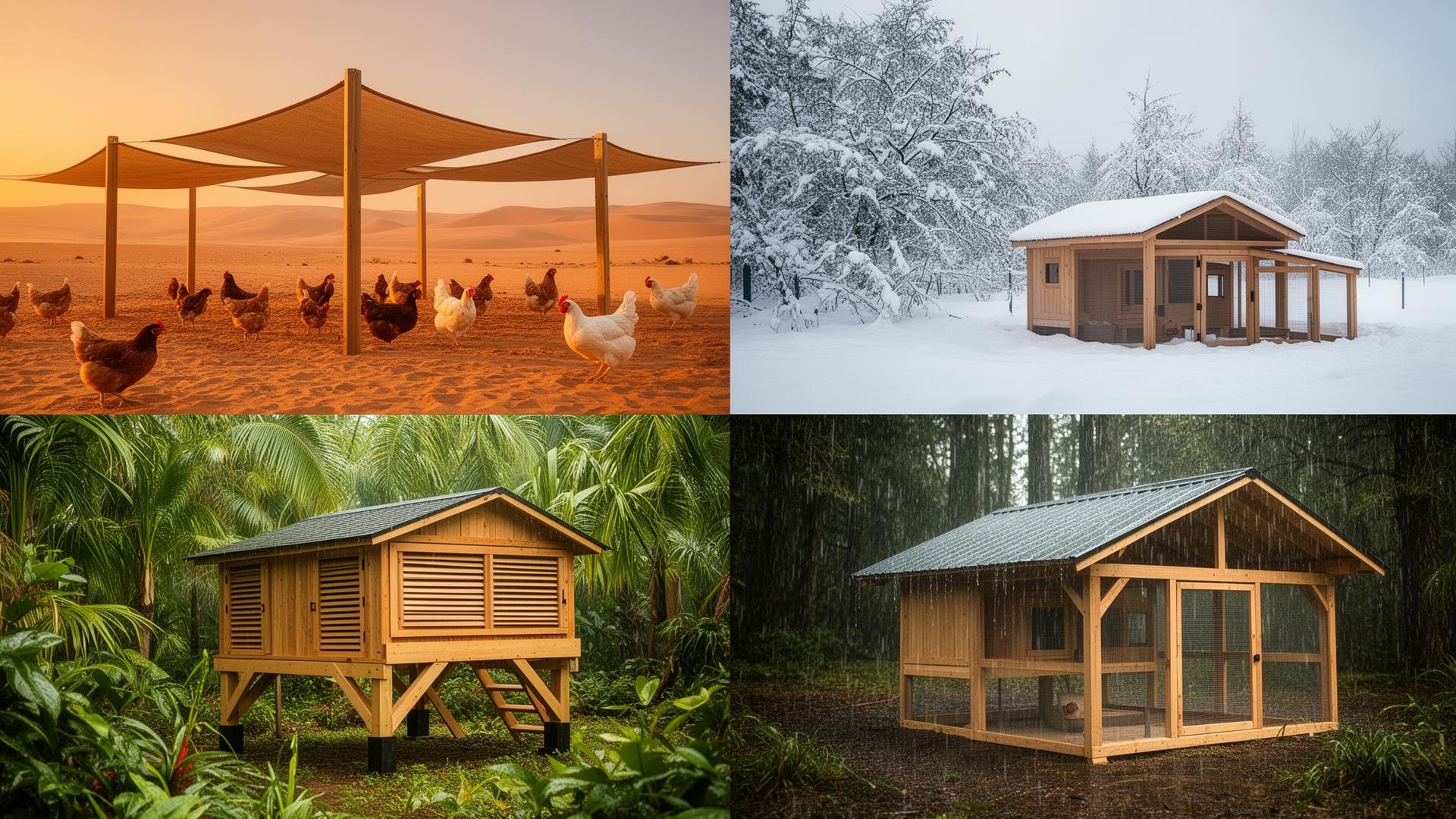
One-size-fits-all chicken coop plans fail in extreme climates. A design that works at 118°F in the Sonoran Desert and one that works through a Minnesota winter are solving opposite problems, and a Gulf Coast build has to survive humidity and wind on top of both. Climate determines every critical design decision—from ventilation placement to material selection.
The difference between a thriving flock and heat-stressed, frostbitten, or disease-prone birds comes down to understanding how your local climate affects chicken biology and adapting coop design accordingly. This comprehensive guide reveals the specific modifications needed for every major climate zone in North America.
The walk-in coop plan sets share a raised floor and framed 2×4 walls, which adapt in both directions — add batt between the studs for cold, or open the vent strip up for heat. The 8×12 walk-in shed coop is the easiest of them to adapt either way.
Understanding Climate Zones for Chicken Keeping
Chicken physiology determines climate requirements, not human comfort preferences. Chickens cannot sweat—they rely entirely on panting, wing spreading, and blood circulation through combs and wattles for cooling. This makes heat management far more critical than cold protection in most regions.
Critical Temperature Thresholds
- Heat stress begins: 85°F (chickens start panting)
- Dangerous heat levels: 90°F+ with humidity (lethal without intervention)
- Cold tolerance: Most breeds comfortable to 20°F when dry and draft-free
- Extreme cold risk: Below 0°F requires supplemental protection
Primary Climate Categories for Coop Design
Hot/Arid (Desert Southwest)
- Summer highs 100°F+, low humidity
- Extreme temperature swings (40°F+ daily variation)
- Intense solar radiation, minimal precipitation
- Primary concern: Heat management and shade
Cold Continental (Northern States/Canada)
- Winter lows below 0°F, heavy snow loads
- Short summers with moderate temperatures
- Primary concern: Insulation and structural integrity
Humid Subtropical (Southeast)
- High humidity year-round (70-90%)
- Moderate temperatures but feels much hotter
- Hurricane/tornado risk, heavy precipitation
- Primary concern: Ventilation and moisture management
Temperate (Pacific Northwest, Moderate Midwest)
- Mild temperature extremes
- High precipitation, moderate humidity
- Primary concern: Drainage and all-weather functionality
Our complete building guide includes climate modifications for every region, addressing the specific challenges that generic plans ignore.
Hot/Arid Climate Designs (Desert Southwest)
In Arizona’s desert climate, heat kills chickens faster than any predator. Phoenix summer temperatures reaching 115°F+ require aggressive cooling strategies that contradict standard coop design advice.
Essential Hot-Climate Modifications
Maximum Ventilation Approach
- Hardware cloth walls: Replace solid siding with 1/2-inch hardware cloth
- Continuous ridge vents: Full roof peak open for hot air exhaust
- Cross-ventilation: Openings on all four walls for airflow
- Floor ventilation: Raised floors with air gaps underneath
For detailed ventilation calculations, see our complete ventilation guide.
Shade and Thermal Management
- Deep roof overhangs: 24-36 inches to shade walls
- Light-colored surfaces: White or light tan reflects solar radiation
- Thermal mass avoidance: No concrete floors or heavy materials
- Eastern orientation: Morning sun acceptable, afternoon shade critical
Cooling Features
- Misting systems: Evaporative cooling works excellently in dry climates
- Shade structures: 70% shade cloth over runs
- Water multiplication: Multiple waterers in shaded locations
- Elevated design: Airflow underneath provides additional cooling
Material Adaptations
- Metal roofing: Excellent heat reflection, quick cooling at night
- No insulation: Traps heat rather than providing cooling
- UV-resistant materials: Standard plastic degrades rapidly
- Galvanized hardware: Stainless where budget allows
For complete Arizona-specific requirements, see our Arizona chicken coop guide.
Breed Considerations for Hot Climates
- Heat-tolerant breeds: Leghorns, Minorcas, Egyptian Fayoumis
- Large combs preferred: Better heat dissipation
- Light-colored plumage: Reflects rather than absorbs heat
- Avoid heavy breeds: Brahmas, Cochins suffer in extreme heat
Cold Climate Designs (Northern States/Canada)
Cold-climate coops prioritize warmth retention while maintaining essential ventilation. The challenge lies in balancing moisture removal with heat conservation—sealed coops cause more problems than drafty ones.
Essential Cold-Climate Modifications
Insulation Strategies
- Wall insulation: R-13 to R-19 in stud cavities
- Roof insulation: R-30 minimum for snow country
- Vapor barriers: Prevent condensation in wall cavities
- Thermal breaks: Minimize heat loss through framing
For complete insulation guidance, see our insulation guide.
Controlled Ventilation Approach
- Adjustable vents: Reduce airflow in extreme cold
- High placement: Ventilation above roost level prevents drafts
- Baffle systems: Indirect airflow prevents wind infiltration
- Minimum 1 sq ft per 10 birds: Reduced from standard summer requirements
Structural Considerations
- Snow load calculations: Roof rated for local snow loads (varies 20-70 psf)
- Foundation below frost line: Prevents heaving and damage
- Steep roof pitch: 6:12 or steeper for snow shedding
- Reinforced construction: Wind and ice storm resistance
Heating and Electricity
- Electrical service: 15-amp circuit minimum for heated waterers
- GFCI protection: Required for all outdoor electrical
- Heated waterers: Base heaters prevent freezing
- Safe supplemental heat: Flat panel radiant heaters, never heat lamps
For complete winter preparation, see our winter weatherization guide.
Cold-Weather Access Features
- Wider doors: Access while wearing bulky clothing
- Interior storage: Feed and supplies protected from freezing
- Easy-open latches: Operable with gloved hands
- Shelter for humans: Weather protection during maintenance
Humid Subtropical Designs (Southeast)
High humidity makes moderate temperatures feel dangerous to chickens. 85°F at 90% humidity creates the same heat stress as 100°F+ in dry climates because evaporative cooling (panting) becomes ineffective.
Essential Humid-Climate Modifications
Aggressive Ventilation Requirements
- Double standard ventilation: 2 square feet per bird minimum
- Ridge and soffit vents: Full-length continuous ventilation
- Power ventilation: Fans for extreme humidity periods
- Cross-flow design: Multiple air paths through coop
Moisture Management Systems
- Raised floors: Mandatory for airflow underneath
- Drainage systems: French drains around coop perimeter
- Moisture barriers: Under roof to prevent condensation drips
- Quick-dry bedding: Sand or pine shavings, never straw
Storm Resistance Features
- Wind rating: 120+ mph for hurricane zones
- Impact-resistant materials: Metal or reinforced siding
- Secure foundation: Concrete pads or deep anchoring
- Emergency access: Removable panels for storm preparation
Pest and Disease Prevention
- Sealed feed storage: High humidity accelerates spoilage
- Improved drainage: Standing water breeds mosquitoes
- Easy cleaning access: Frequent cleaning required
- Pest-resistant materials: Metal or treated lumber throughout
Temperate Climate Designs (Pacific Northwest, Midwest)
Moderate climates require balanced designs that handle diverse weather patterns. These regions experience significant seasonal variation without extreme temperatures, creating different challenges.
All-Weather Functionality
- Variable ventilation: Adjustable systems for seasonal changes
- Weather protection: Overhangs and windbreaks for comfort
- Drainage planning: Essential for high-precipitation regions
- Moderate insulation: R-7 to R-13 for comfort without overheating
Precipitation Management
- Gutters and downspouts: Direct water away from coop
- Proper site grading: Slope away from foundation
- Mud prevention: Gravel or mulch in high-traffic areas
- Covered run areas: Outdoor access during rain
Seasonal Adaptation Features
- Removable wall panels: Convert between winter and summer modes
- Adjustable roosts: Higher in winter, lower in summer
- Flexible run systems: Expandable for good weather periods
- Storage integration: Space for seasonal equipment
Extreme Weather Considerations
Climate change increases extreme weather frequency across all regions. Modern coop designs must withstand not just typical conditions, but unprecedented storms, heat waves, and cold snaps.
Heat Wave Protection
- Emergency cooling: Misting systems, fans, frozen water bottles
- Shade expansion: Temporary shade cloth deployment
- Water backup: Multiple sources prevent shortages
- Heat-tolerant landscaping: Trees and shrubs for long-term shade
Ice Storm Resilience
- Structural redundancy: Over-engineered roof systems
- Power alternatives: Generator capability for heated waterers
- Emergency access: Multiple routes to coops
- Backup supplies: Feed and bedding storage
Flood Preparation
- Elevated construction: Above 100-year flood levels
- Quick relocation: Portable coop options
- Drainage systems: Handle extreme precipitation
- Emergency evacuation: Transport crates and plans
Wildfire Considerations
- Defensible space: Cleared area around coops
- Fire-resistant materials: Metal roofing, concrete foundations
- Water access: Hoses and sprinkler capability
- Evacuation planning: Rapid removal procedures
Climate-Specific Material Selection
Materials that work in one climate can fail catastrophically in another. Understanding how different materials respond to temperature, humidity, and weather patterns prevents expensive failures.
For comprehensive material guidance, see our materials selection guide.
Hot Climate Material Choices
- Roofing: Galvanized metal with reflective coating
- Siding: Hardware cloth with shade fabric backing
- Foundation: Concrete blocks for thermal mass avoidance
- Fasteners: Stainless steel to prevent rust
- Avoid: Asphalt shingles, solid wood siding, dark colors
Cold Climate Material Choices
- Roofing: Architectural shingles rated for ice dams
- Siding: Cedar or pressure-treated plywood with house wrap
- Foundation: Concrete or pressure-treated lumber below frost line
- Insulation: Fiberglass batts with vapor barriers
- Avoid: Metal siding (thermal bridging), inadequate vapor barriers
Humid Climate Material Choices
- Roofing: Metal with high-performance underlayment
- Siding: Pressure-treated or naturally rot-resistant lumber
- Foundation: Concrete with moisture barriers
- Hardware: Galvanized or stainless throughout
- Avoid: Untreated lumber, standard steel fasteners
Temperate Climate Material Choices
- Roofing: Asphalt shingles or metal, depending on precipitation
- Siding: Composite materials or treated lumber
- Foundation: Pressure-treated skids or concrete pads
- Versatile fasteners: Galvanized screws throughout
Seasonal Adaptation Features
The best climate-adapted coops include features that modify for seasonal changes. Built-in flexibility ensures optimal conditions year-round rather than fixed compromises.
Adjustable Ventilation Systems
- Sliding panels: Increase airflow for summer, reduce for winter
- Removable wall sections: Convert solid walls to hardware cloth
- Hinged vents: Variable opening sizes
- Storm shutters: Complete closure for extreme weather
Modular Run Systems
- Seasonal expansion: Larger runs for good weather
- Weather protection: Covered areas for rain/snow
- Wind barriers: Temporary windbreaks for cold periods
- Shade deployment: Moveable shade structures
Adaptive Interior Features
- Adjustable roosts: Higher placement in cold weather
- Removable insulation: Add/remove as seasons change
- Variable bedding depth: Deeper litter for winter warmth
- Equipment storage: Space for seasonal tools and supplies
Regional Design Examples
Specific regional adaptations demonstrate how climate drives design decisions. These examples show real-world applications of climate principles.
Phoenix, Arizona Adaptation
- Design priority: Maximum airflow and shade
- Wall construction: Hardware cloth with 70% shade fabric
- Roof system: White metal with 36-inch overhangs
- Cooling features: Misting system operating 2-5 PM daily
- Elevation: 24-inch minimum clearance for airflow
Minnesota Winter Adaptation
- Design priority: Insulation with controlled ventilation
- Wall construction: 2×6 framing with R-19 insulation
- Roof system: Steep pitch for snow load, R-30 insulation
- Heating features: 15-amp electrical for heated waterers
- Foundation: Concrete below 42-inch frost line
Florida Hurricane Adaptation
- Design priority: Storm resistance and moisture management
- Wall construction: Metal siding on engineered frame
- Roof system: Impact-rated metal, 120+ mph wind rating
- Foundation: Concrete pad with anchor bolts
- Drainage: French drains and elevated construction
Pacific Northwest Rain Adaptation
- Design priority: Weather protection and drainage
- Wall construction: Cedar siding with house wrap
- Roof system: Architectural shingles with full gutters
- Run coverage: 50% covered for year-round outdoor access
- Site preparation: Extensive gravel base for drainage
Climate-Specific Mistakes to Avoid
Climate-inappropriate designs create expensive failures and unhealthy flocks. Understanding these common mistakes prevents costly rebuilds and bird losses. For more common building errors, see our expensive coop mistakes guide.
Hot Climate Mistakes
- Insulation installation: Traps heat rather than providing cooling
- Solid wall construction: Prevents essential airflow
- Dark-colored materials: Absorb and retain dangerous heat
- Inadequate shade: Direct sun exposure causes heat stroke
- Water rationing: Insufficient waterers for increased consumption
Cold Climate Mistakes
- Over-sealing coops: Creates dangerous moisture buildup
- Heat lamp usage: Fire hazard that kills chickens annually
- Inadequate insulation: Wasted heating energy
- Poor ventilation placement: Creates drafts on roosting birds
- Insufficient electrical: Cannot power heated waterers safely
Humid Climate Mistakes
- Standard ventilation rates: Inadequate for moisture removal
- Poor drainage planning: Creates breeding ground for disease
- Insufficient storm preparation: Structural failure in hurricanes
- Moisture-sensitive materials: Rapid rot and deterioration
- Inadequate pest control: High humidity increases pest pressure
Temperate Climate Mistakes
- Fixed ventilation systems: Cannot adapt to seasonal changes
- Inadequate drainage: Problems during high-precipitation periods
- Inflexible design: Cannot accommodate weather extremes
- Seasonal access problems: Maintenance difficulties in bad weather
Choosing Plans for Your Climate
Climate should be the primary factor in plan selection, not appearance or cost. Use our plan quality checklist to evaluate climate-specific features in any plans you’re considering.
Essential Plan Features by Climate
Hot/Arid Requirements
- Maximum ventilation specifications (2+ sq ft per bird)
- Shade calculation and overhang details
- Cooling system integration options
- Heat-resistant material specifications
- Elevation requirements for airflow
Cold Climate Requirements
- Insulation specifications and installation details
- Snow load calculations for your region
- Electrical planning for heated equipment
- Vapor barrier and moisture management
- Adjustable ventilation systems
Humid Climate Requirements
- Enhanced ventilation calculations
- Storm resistance engineering
- Drainage system specifications
- Moisture-resistant material lists
- Pest prevention features
Where Our Own Plans Fit
Cold winters: the 8x12 insulated cold-climate coop is the only design in our library drawn for insulation from the start, with sheathing, house wrap and a vented air gap on the detail sheets. The insulation guide covers what that costs over the uninsulated 8x12 walk-in.
Hot or dry summers: size vents first and pick a footprint second. The Arizona coop guide walks through shade and airflow for desert heat, and any of our plans can take extra vent area before you frame the walls.
Mild, wet or temperate climates: the single-slope designs shed rain one way and are the easiest roofs to frame, including the 4x8 shed coop, the 4x8 lean-to, the 6x8 modern coop and the walk-in family from the 6x8 walk-in up to the 10x10 walk-in. If free material matters more than looks, the 6x8 pallet-clad coop frames in real lumber and clads in reclaimed board.
Questions to Ask Plan Providers
- Has this design been tested in my climate zone?
- What modifications are recommended for my region?
- Are material alternatives provided for different climates?
- Does ventilation sizing account for local humidity levels?
- Are structural calculations appropriate for local weather loads?
Climate-Adapted Design: The Foundation of Successful Chicken Keeping
Climate determines every aspect of chicken coop functionality—from basic survival to egg production optimization. Chickens in climate-appropriate housing are healthier, more productive, and require significantly less management than birds struggling against inappropriate environments.
The investment perspective: Climate-specific plans may cost slightly more than generic alternatives, but they prevent the much higher costs of rebuilding failed coops, replacing heat-stressed or frozen birds, and dealing with health problems caused by environmental stress.
Long-Term Benefits of Climate-Appropriate Design
- Lower mortality: Environmental stress is the leading cause of backyard chicken deaths
- Higher production: Comfortable birds lay more consistently
- Reduced maintenance: Appropriate materials last longer in local conditions
- Lower energy costs: Efficient designs reduce heating/cooling needs
- Greater enjoyment: Successful flocks are more rewarding to keep
Climate adaptation isn’t an optional upgrade—it’s the fundamental requirement for successful chicken keeping. Choose plans designed specifically for your weather patterns rather than hoping generic designs will work in your environment.
Frequently Asked Questions
Can I modify generic plans for my climate?
Basic modifications are possible (adding insulation, increasing ventilation), but fundamental design changes like structural requirements for snow loads or hurricane resistance require professionally engineered plans. It’s usually more cost-effective to choose climate-specific plans.
How do I know what climate zone I’m in for coop planning?
Use your USDA Hardiness Zone for cold tolerance, but also consider local factors: summer high temperatures, humidity levels, precipitation patterns, and extreme weather frequency. Local extension services often provide specific guidance.
Do I need different plans for each season?
No, but your plans should include seasonal adaptation features like adjustable ventilation, removable panels, or modular components. Fixed designs that work year-round are compromises that don’t optimize for any season.
What’s the most important climate factor for chicken health?
Heat management is typically most critical because chickens cannot sweat. Even cold-climate chickens face summer heat stress, while heat-tolerant breeds can often handle cold better than heavy breeds handle heat.
Are climate-specific plans worth the extra cost?
Yes. Getting the climate right at drawing time costs nothing — overhang depth, vent area and insulation are decisions, not line items you bolt on later. Getting it wrong costs a rebuild, and our own numbers put a replacement 8x12 at $4,250-$5,450 in materials. Insulating that same shell is $1,250-$1,650 if you plan for it, and a teardown if you don’t.