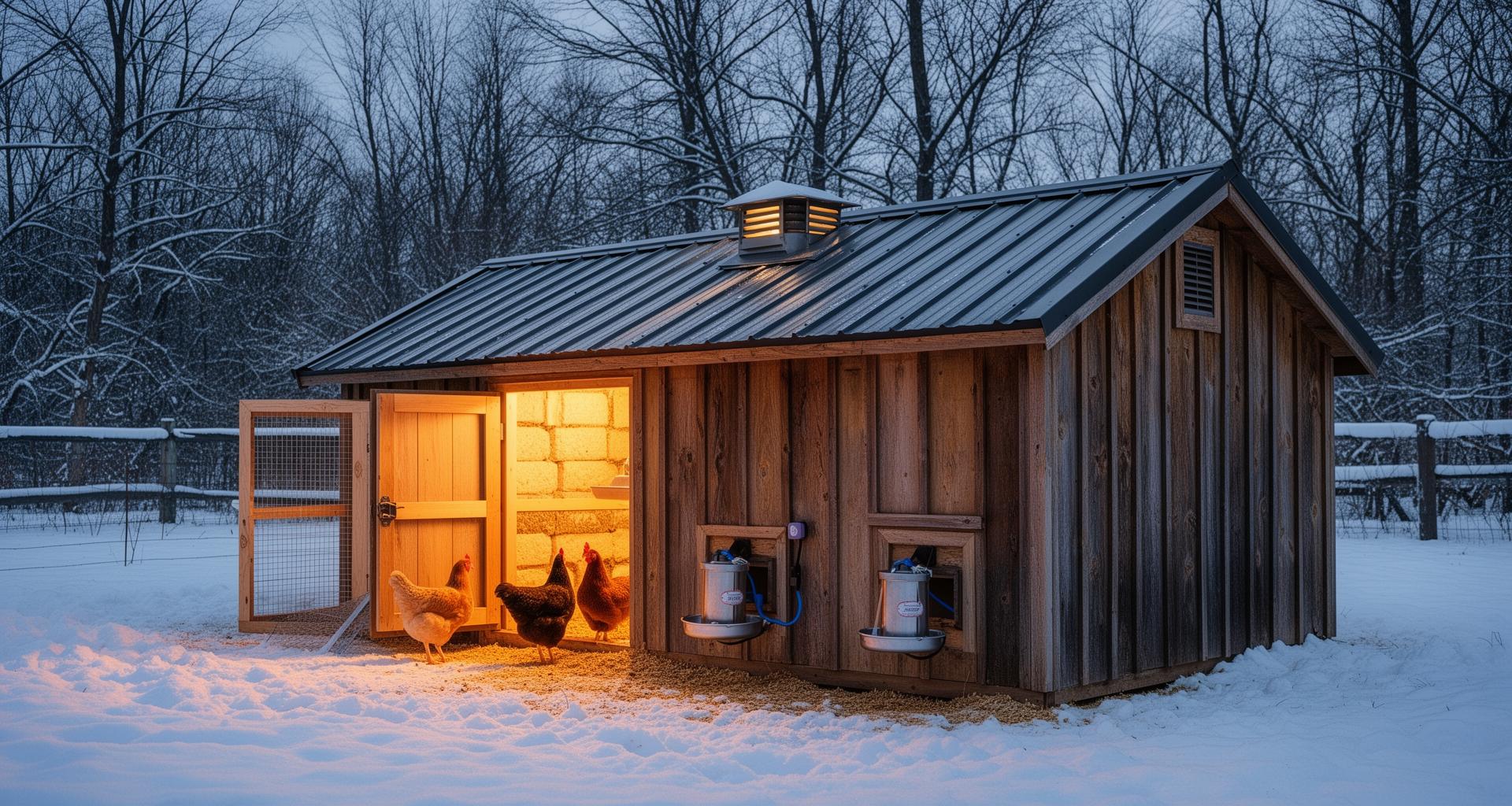
A solid winter chicken coop setup is less about “making it warm” and more about making it dry, draft-protected, well-ventilated, easy to maintain, and ready for emergencies. If your coop stays dry inside, blocks wind at roost level, and still vents moisture out high, your flock will handle cold far better than most people expect.
The Winter Rule
Dry + Draft-Free + High Ventilation beats “hot” almost every time.
Heating can be helpful in specific cases, but it’s never the first step.
Most common winter failure: Sealing the coop “tight” and accidentally trapping humidity.
The 8×12 walk-in shed coop and the 8×8 walk-in set both frame standard 2×4 walls that take R-13 batt, and both vent above roosting height — the combination winter actually needs.
Chicks are the exception to the do-not-heat rule — they genuinely need supplemental warmth. See the brooder size calculator for the week-by-week temperature step-down.
Quick Winter Chicken Coop Checklist
The fastest path to a winter-ready coop. This sequence prevents the classic mistake: adding heat before fixing moisture and drafts.
Week 1 Make the Coop “Weather-Smart”
- Fix roof leaks and dripping seams
- Block drafts at roost height (cracks, doors, warped panels)
- Keep high ventilation open and predator-protected
- Add windbreak outside the run if needed
- Replace wet bedding and dry out the floor
Week 2 Make Winter Care Easy
- Set up water-freeze strategy (heated base or swap plan)
- Prep dry-feed storage bin and backup feeders
- Verify latches and predator security
- Build an emergency kit (power outage + storm kit)
- Decide on heating only if conditions justify it
Don’t do this: Seal every crack “to keep heat in” and remove ventilation. That traps moisture, which increases frostbite risk and makes the coop feel colder.
Ventilation vs Drafts: The Most Misunderstood Topic
People often “winterize” by sealing everything, then wonder why the coop smells, walls sweat, or comb tips frostbite. That happens because humid air is trapped. Chickens exhale moisture all night; droppings add more humidity. For comprehensive climate-specific ventilation guidance, see our climate design guide.
Good Winter Airflow
- • High vents remain open and protected with hardware cloth
- • Air enters gently and exits near roofline
- • Roosts are away from direct airflow paths
- • No condensation on ceiling or walls in the morning
Bad Winter Airflow
- • Low vents or gaps aim wind across birds on the roost
- • Everything sealed so tight moisture can’t escape
- • Ammonia smell even after cleaning
- • Condensation/frost on walls and ceiling
Mental model: You want a “chimney effect” (moist air leaves high) without a “wind tunnel” (draft at roost height).
Water Freezing Solutions
In many places, winter flock stress is less about cold and more about keeping water available. Dehydration reduces feed intake, which can reduce body warmth.
Method What It Is Pros Cons/Risks
Swap warm water Bring fresh water 2-3x daily No electricity, cheap Labor heavy; tough during storms
Two-waterer rotation Keep spare indoors, swap when frozen Reliable and cheap Requires routine and timing
Heated base Heated plate under waterer Simple, widely used Requires power + cord protection
Heated waterer Built-in heated unit Hands-off in cold snaps Power + cord safety; higher cost
Tip: Always have a no-power backup plan for water (extra containers + swap routine) even if you use heated equipment.
Heating Options (Safe-First Approach)
The safest approach is to treat heat as a targeted tool, not a default. Many flocks do fine without added heat when moisture and drafts are controlled.
Option What It Helps Pros Cautions
No coop heat Relies on dry, draft-free design Lowest risk, simplest Requires solving moisture/drafts correctly
Heat for water only Prevents freezing Targets the real daily problem Still requires cord safety + outage backup
Low-watt radiant panel Gives birds a warm “zone” Safer than exposed elements Must be mounted correctly; electrical risk
Heat lamp Raises ambient temp fast Powerful and common Highest fire risk if misused
Best “first” heat: For many owners, heating water (not air) solves 80% of winter stress with less risk than trying to warm the entire coop.
Frequently Asked Questions
Do I need a heater in a winter chicken coop?
Often no. Most healthy adult chickens tolerate cold well if they are dry, draft-protected, and the coop is ventilated properly. Heating is usually reserved for extreme cold, wet conditions, or vulnerable birds and should be done with safer, low-risk options like radiant panels rather than heat lamps.
Should I seal all gaps to keep the coop warm?
Seal drafts at roost height, yes—but don’t remove high ventilation. Trapped humidity is a bigger winter problem than cold air. You want a “chimney effect” where moist air can escape near the roofline while blocking wind at bird level.
What’s the best winter water setup?
The “best” setup is the one that stays reliable during cold snaps and outages. Many people heat water (not air) using heated bases or heated waterers, plus a backup swap plan for outages. Always have extra containers ready.
Can I insulate without causing condensation?
Yes—if you keep high ventilation open and protect insulation from pecking with a solid interior barrier. Insulation that traps moisture (paired with poor ventilation) can worsen condensation and actually make conditions worse for your birds.
What’s the #1 winter chicken coop priority?
Moisture control. Fix leaks, maintain high ventilation, keep bedding dry, and stop drafts at roost height. Moisture is more dangerous than cold for chickens—wet feathers and damp conditions lead to frostbite and respiratory issues.
What is the biggest winter risk for chickens?
Moisture. Damp bedding, condensation, and drafts on roosting birds create far more problems than cold air alone. Keep the coop dry, ventilated high, and draft-free at roost level.
Bottom Line
A great winter chicken coop plan is mostly about engineering airflow and moisture: keep birds out of drafts, keep vents high and open, keep bedding dry, and have a water-freeze and emergency plan that still works when power fails. Do those fundamentals first, then consider insulation and heating as optional upgrades—not defaults.