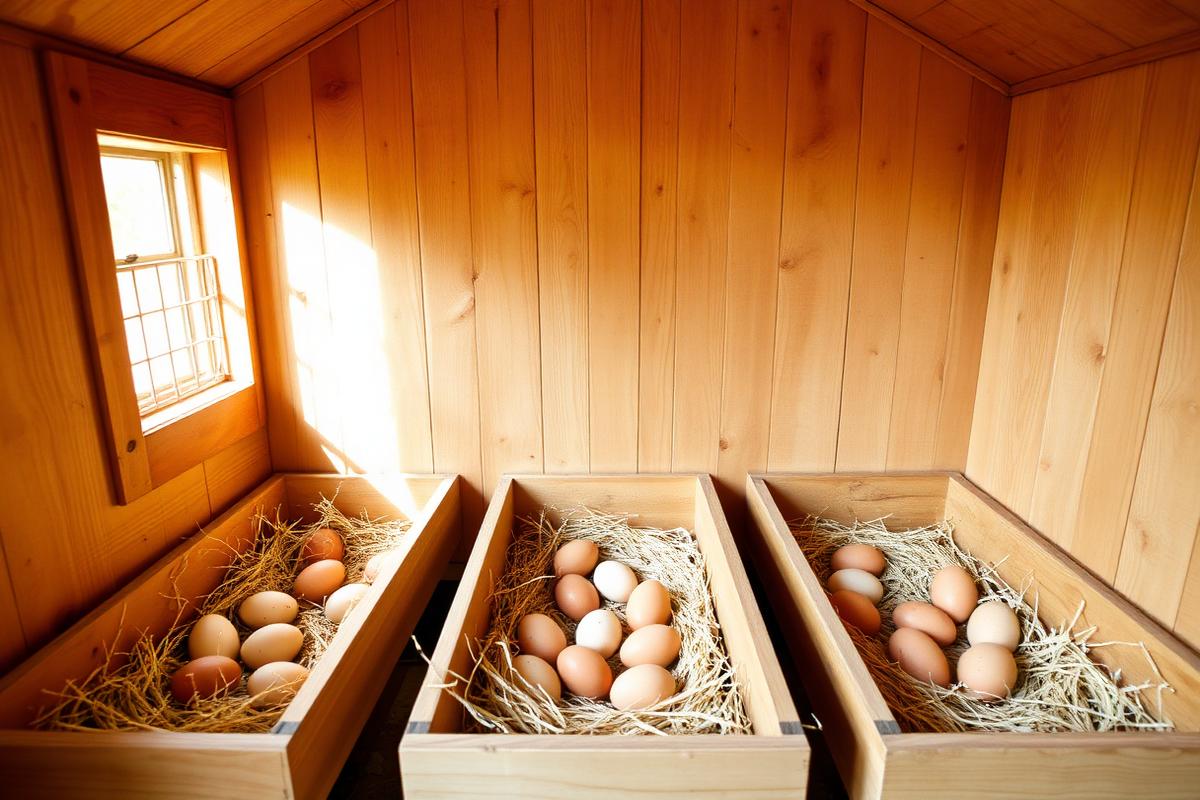
Nesting boxes are where your egg production happens — get them wrong, and hens lay on the floor, break eggs, or refuse to use the coop entirely. After installing nesting boxes in 50+ coops across Arizona, I’ve nailed down the exact sizes, materials, heights, and placement strategies that maximize egg production and minimize broken-egg headaches.
If you’re building from scratch, our chicken coop plans include nesting box dimensions for every design — but this guide covers the details that plans often skip: why hens reject certain boxes, how bedding choice affects egg cleanliness, and the specific mistakes that cause egg-eating behavior.
How Many Nesting Boxes Do You Need?
The golden rule: one nesting box for every 3–4 hens. More isn’t better — too many boxes means hens spread out, and some boxes never get used while others become overcrowded favorites.
Flock Size Nesting Boxes Layout
2–4 hens1–2 boxesSingle row 5–8 hens2–3 boxesSingle row 9–12 hens3–4 boxesSingle or double row 13–20 hens4–5 boxesDouble row 20+ hens5–7 boxesDouble or stacked
Common Mistake Don’t add more boxes than needed. Excess boxes become sleeping spots, which means manure in the nest and dirty eggs every morning.
Nesting Box Dimensions by Breed Size
Standard 12×12×12-inch boxes work for 80% of backyard breeds. But if you’re raising bantams or large breeds, incorrect sizing causes real problems:
-
Too large: Hens feel exposed and unsafe — they’ll find a corner on the floor instead
-
Too small: Large breeds can’t turn around, leading to broken eggs and bruised combs
-
Too deep: Hard to collect eggs; hens may refuse to enter dark, tunnel-like boxes
Breed Size Width Depth Height Example Breeds
Bantam10”10”10”Silkies, Sebrights, d’Uccles Standard12”12”12”Leghorns, RIRs, Australorps Large / Giant14”14”14”Brahmas, Jersey Giants, Cochins
All of our chicken coop plans specify nesting box dimensions matched to the coop’s target flock size — no guessing required.
Where to Place Nesting Boxes
Placement matters more than box quality. A perfectly built box in the wrong spot gets ignored.
Height Rules
- 18–24 inches off the floor for standard breeds
- 12–18 inches for large/giant breeds or older hens
- Always below roost bars — hens sleep at the highest point, so if boxes are higher than roosts, they’ll sleep (and poop) in the nests
Location Rules
- Darkest corner: Hens instinctively seek dark, sheltered spots to lay
- Away from traffic: Don’t place near the pop door or high-activity areas
- Draft-free: Not directly under ventilation openings
- Accessible for collection: External access doors save time and reduce coop disturbance
Good coop ventilation design keeps the nesting area dry without creating drafts directly on the boxes.
Best Nesting Box Materials
Box Construction
- Plywood (1/2”): Most common, easy to build, affordable. Seal edges to prevent moisture wicking.
- Solid lumber: More durable but heavier. Good for permanent installations.
- Metal (galvanized): Best for easy cleaning — mites can’t hide in smooth surfaces.
- Plastic tubs/buckets: Budget option. 5-gallon buckets work for standard hens — drill drainage holes.
Bedding Options
- Pine shavings: Best all-around choice. Soft, absorbent, easy to replace. Avoid cedar (toxic fumes).
- Straw: Traditional but holds moisture and harbors mites. Replace frequently.
- Nesting pads: Rubber or astroturf pads are washable and reusable — great for hot climates where bedding decomposes fast.
- Sand: Works in hot/arid climates — stays cool, drains well, easy to sift clean.
For a full comparison of bedding materials and their impact on egg cleanliness, see our flooring and bedding guide.
Common Nesting Box Problems (And Fixes)
Hens laying eggs on the floor instead of in boxes
-
• Boxes may be too high — lower them or add a ramp
-
• Not dark enough — add a curtain or lip to block light
-
• Place a fake egg or golf ball in the box to signal “lay here”
-
• Young pullets need training — lock them in the coop in the morning until they lay
Hens sleeping in nesting boxes
-
• Roost bars are lower than nest boxes — raise the roosts
-
• Not enough roost space — add more perch length (8–10” per bird)
-
• Block box access after dark for a few nights to retrain
-
• Add a sloped roof over boxes so birds can’t perch on top
Egg-eating behavior
-
• Add more bedding to cushion eggs and prevent cracking
-
• Collect eggs more frequently (2x daily minimum)
-
• Consider roll-away nest boxes — eggs roll to a protected collection area
-
• Ensure adequate calcium (oyster shell free-choice)
-
• A ceramic egg decoy discourages pecking
Broody hen hogging a box
-
• If you don’t want chicks, remove the broody hen to a wire-bottom cage for 3 days
-
• Collect eggs frequently to reduce broody triggers
-
• Having enough boxes (1 per 3-4 hens) reduces congestion when one goes broody
-
• Some breeds (Silkies, Cochins) go broody often — plan for it
DIY Nesting Box Plans
Building your own nesting boxes is straightforward — it’s one of the simplest components in any chicken coop plans set.
Simple 3-Box Unit (Materials)
- • 1 sheet 1/2” plywood (4×4’ is plenty)
- • 1×4 board for front lip (36” length)
- • 1.5” galvanized screws
- • Wood glue (optional)
- • Total cost: $15–25
Assembly Steps
- Cut plywood: 2 side panels (12×12”), 1 top (36×12”), 1 bottom (36×12”), 1 back (36×12”), 2 dividers (12×12”)
- Assemble the box frame: bottom, back, two sides
- Insert dividers at 12” intervals to create 3 compartments
- Attach top panel (slope it slightly backward for drainage)
- Add 4” front lip to keep bedding and eggs from rolling out
- Mount at 18–24” height with brackets or a French cleat
For complete cut lists integrated into full coop builds, browse our beginner-friendly chicken coop plans.
External Egg Collection Doors
The single best upgrade you can make to any nesting box setup. An external access door lets you collect eggs without entering the coop — it takes 30 seconds instead of 5 minutes.
-
Cut an opening: Match the back wall opening to the nest box back panel
-
Add a hinged door: Piano hinge on top, latch on bottom
-
Weatherproof: Add drip edge flashing above the door and seal edges
-
Predator-proof: Use a two-step latch that raccoons can’t open — see our predator-proofing guide
Pro Tip All premium chicken coop plans include external egg door details. It’s worth the extra 2 hours of build time — you’ll thank yourself every morning.
Frequently Asked Questions
Can I use milk crates as nesting boxes?
Yes — plastic milk crates work well as budget nesting boxes. They’re roughly 13×13×11”, which suits standard breeds. Mount them on their side, add a front lip with a zip-tied board, and fill with shavings. Easy to remove and hose down for cleaning.
Should nesting boxes have a roof?
Yes — a sloped roof prevents hens from roosting on top (which means manure on top of the boxes). Slope the roof at about 45° so birds can’t perch. This also makes cleaning the top easier.
How often should I change nesting box bedding?
Replace soiled bedding weekly and do a full swap every 2–4 weeks. If you notice dirty eggs consistently, you’re not changing bedding often enough. In humid climates, change more frequently to prevent mold.
Do I need nesting box curtains?
Curtains aren’t required but can help in bright coops. Hens prefer dark, private spaces for laying. A simple burlap or fabric strip hung over the opening reduces light and can increase box usage. Cut slits so hens can push through easily.